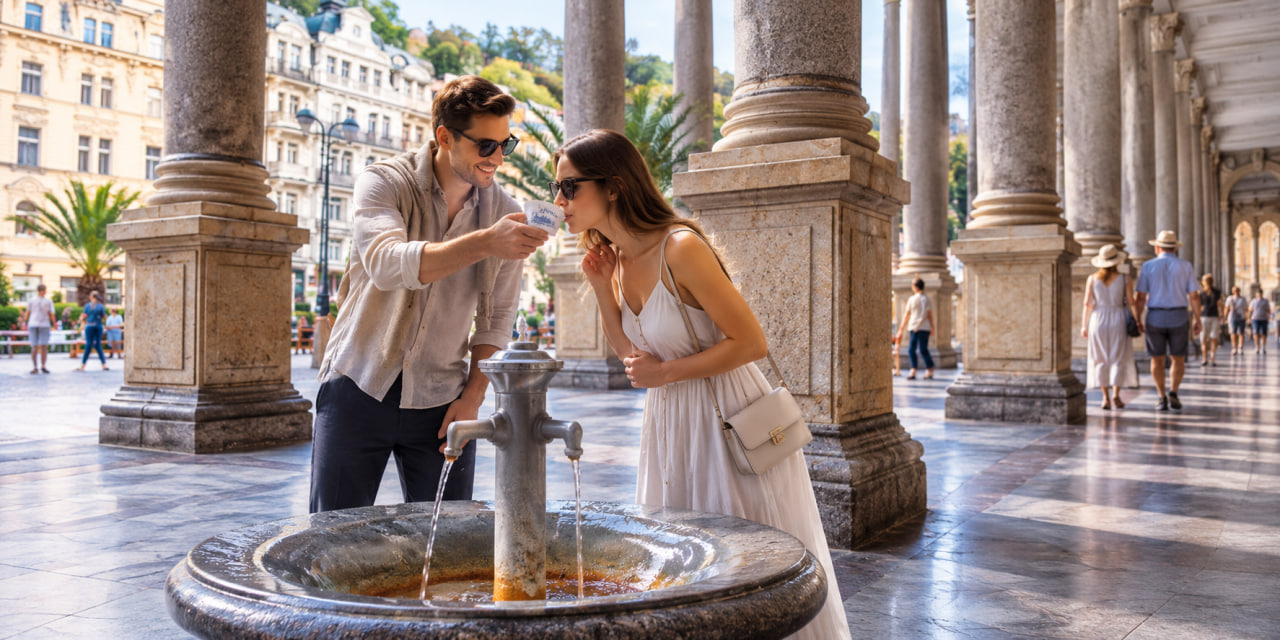
Your First Day in Karlovy Vary: Where to Start — Hour-by-Hour Guide
Karlovy Vary is a compact city. All the main colonnades fit within a half-hour walk. It sounds…
Karlovy Vary and Mariánské Lázně are 50 kilometres apart — but from a medical perspective, they are two completely different resorts. Different geology, different water temperature, different mineral composition, different target organs. Choosing between them is not a matter of preference — it is a matter of diagnosis.
Here is a concrete comparison across four parameters: origin, temperature, composition, and indications.
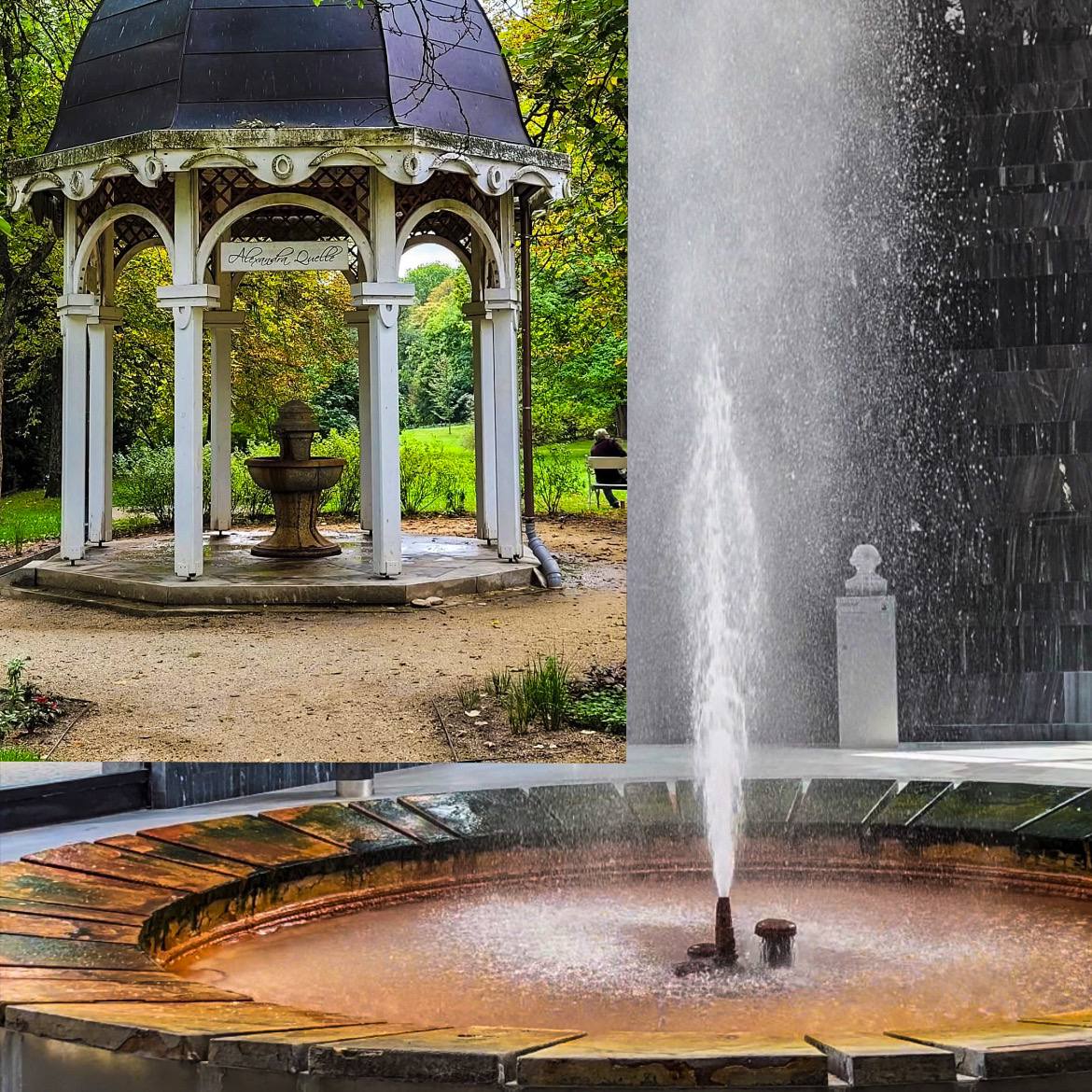
The springs of Karlovy Vary have a volcanic, geothermal origin. These are deep thermal waters rising from the Earth’s crust, formed through ancient geological activity.
In contrast, the Mariánské Lázně springs are surface-level and formed through natural filtration of rainwater through mineral-rich soils. The region is also rich in natural carbon dioxide, which influences both the chemical profile and therapeutic effects of the waters.
These differences determine not only how the waters are used — but the mechanism by which they act on the body.
Hot Karlovy Vary water (30–72°C) entering the stomach triggers a neurohumoral reflex that dilates the bile ducts — producing the choleretic and antispasmodic effect that underlies the resort’s specialisation in digestive and liver conditions.
Cold Mariánské Lázně water (7–10°C) with high CO₂ stimulates gastric G-cells and enhances diuresis — which explains the specialisation in kidney and urinary tract conditions. Dissolved CO₂ additionally dilates blood vessels and improves microcirculation — hence the indications for cardiovascular conditions.
Karlovy Vary water is classified as sodium-bicarbonate-sulfate with high mineralization. This composition stimulates digestion, enhances metabolism, and supports liver and pancreatic regeneration.
Mariánské Lázně boasts diverse mineral waters, including sulfate, ferruginous (iron-rich), calcium, and carbonated types. This variety allows for highly individualized treatment programs.
Note: Due to its composition, Mariánské Lázně water is not used to produce evaporated salt. In Karlovy Vary it is — Karlovy Vary drinking salt is a concentrate of the spring water, with a mineralisation of approximately 6.5 g/l. This is roughly 20 times higher than most bottled mineral waters, and it is precisely this concentrate that allows the drinking therapy to be continued at home between visits to the resort.
→ Karlovy Vary drinking salt: shop.feelkarlovyvary.cz
Each spa specializes in different areas of treatment:
Doctors often recommend a combined spa treatment using both locations to maximize healing:
A simple practical guide:
Go to Karlovy Vary if you have:
Go to Mariánské Lázně if you have:
Both resorts — if you have:
| Parameter | Karlovy Vary | Mariánské Lázně |
|---|---|---|
| Water Type | Hot, alkaline | Cold, CO₂-rich |
| Temperature | 30–72 °C | 7–10 °C |
| Origin | Volcanic, geothermal | Surface-level, carbonated |
| Composition | Sodium-bicarbonate-sulfate | Sulfate, iron, calcium, carbonated |
| Primary Uses | GI tract, liver, metabolism | Kidneys, joints, lungs, heart |
Both spas are internationally acclaimed and provide complementary benefits. The best choice depends on your health goals — but for full-body healing, experiencing both is ideal.
→ Drinking Cure in Karlovy Vary — how a course works
→ Karlovy Vary for gastritis and peptic ulcer

📌 Recommended before walking the colonnades
Most tourists drink from the first spring they find and move on — never understanding what it's good for or how to drink it properly.
The guide explains how the springs differ, how to choose the one that's right for you, how to drink correctly, and how to avoid wasting half a day on beginners' mistakes.
Karlovy Vary is a compact city. All the main colonnades fit within a half-hour walk. It sounds…
Karlovy Vary is one of the few resorts in the world where water from natural springs is an official…

Dresden is one of the few cities in Europe that justifies any superlative thrown at it. “Florence…