
New Year’s Eve in Karlovy Vary 2026: Where to Celebrate and What to Know
Karlovy Vary in December is a completely different city. Without the summer crowds, without queues…
An important note upfront: this article is informational, not medical. We explain the balneological tradition and the mechanism of action of Karlovy Vary mineral water, drawing on official resort data and scientific institutions. The decision to undertake a therapeutic course and the specific programme is always made by a physician — taking into account your diagnosis, stage of disease, and associated conditions. Self-treatment for liver conditions is not acceptable.
Karlovy Vary has specialised in digestive system conditions for several centuries. According to the official list of the resort’s indications, the profile includes chronic liver and gallbladder conditions, post-acute hepatitis and toxic liver damage, chronic pancreatic conditions, and post-operative states following gallbladder and bile duct surgery.
This is not a marketing claim. The Institute of Balneology of the Karlovy Vary Region (ILaB) — a state scientific institution — systematically researches the effects of spa treatment and publishes clinical data. Karlovy Vary balneology has a documented evidence base that distinguishes it from the general concept of “spa.”
The mechanism of action relates to the chemical composition of the water and its temperature.
Composition: Karlovy Vary mineral water is a sodium bicarbonate-sulphate water with a mineralisation of approximately 6.5 g/l. Key components in the context of liver conditions:
Temperature: hot water (30–72°C depending on the spring) entering the stomach reflexively dilates the bile ducts through a neurohumoral response. This improves bile flow — a key factor in biliary dyskinesia and stasis.
Drinking regime: the water is taken in slow sips while walking — this is not incidental. Walking during water intake additionally stimulates peristalsis and bile secretion.

According to resort data and Karlovy Vary sanatorium information, the profiled indications include:
Liver conditions:
Gallbladder and bile duct conditions:
Pancreatic conditions:
Karlovy Vary treatment is not indicated for:
This matters: travelling during an acute episode will not only fail to help but may cause harm. The resort works in remission and as maintenance therapy — not as a replacement for acute treatment.
A comprehensive spa course for liver and gallbladder conditions typically includes:
Drinking therapy — the foundation. A specific spring (or several) is prescribed, along with volume, temperature, and timing. For liver conditions, water with higher sulphate content from the Mill Colonnade springs is most often prescribed — primarily springs No. 6 (Libuše) and No. 7 (Svoboda). The final prescription is made by the spa physician after examination and tests.
Mineral baths — improve microcirculation, relieve muscle tension, and provide a general detoxifying effect.
Dietary therapy — a mandatory part of the course. Sanatoriums provide specialised nutrition with restricted fat and alcohol, emphasising foods that support liver function.
Carbon dioxide baths (CO₂) — improve peripheral circulation and venous drainage, which indirectly reduces the liver’s workload.
Physiotherapy and massage — prescribed by a physician as a supplement to the drinking cure.
Minimum duration: an effective course is no less than 14–21 days. Short visits of 3–5 days yield significantly less benefit for liver conditions — unlike, for example, a preventive visit.
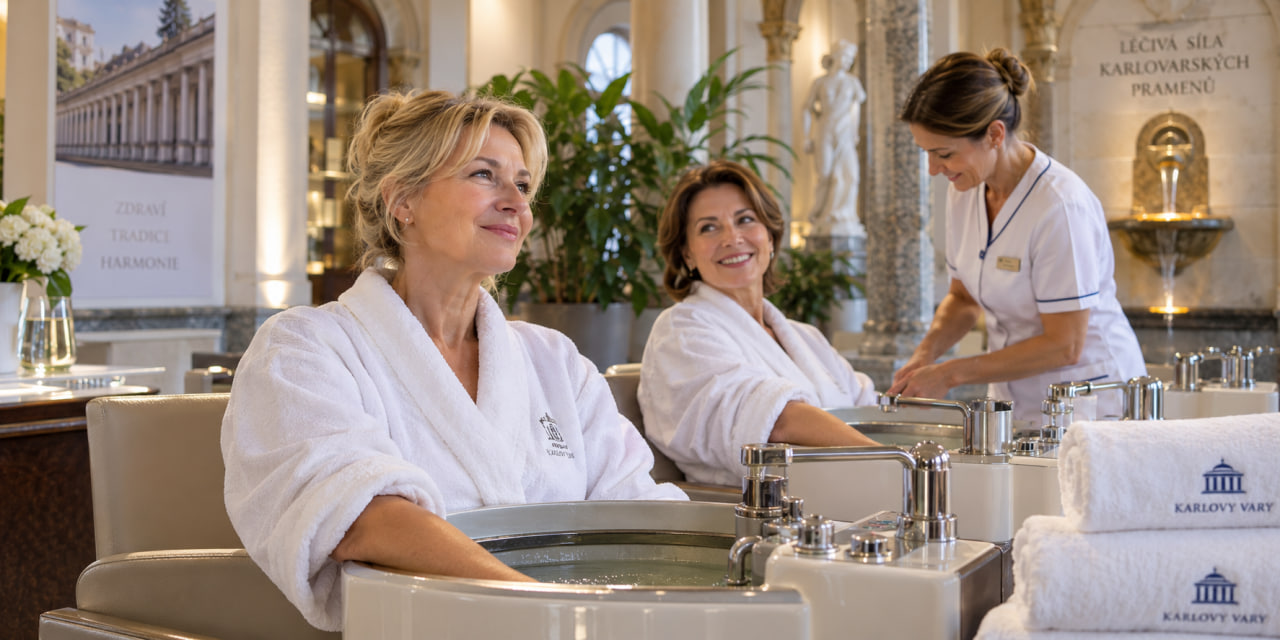
In most Karlovy Vary sanatoriums, the course begins with a mandatory medical examination. For liver-related visits, this includes:
Based on the results, the physician draws up an individual programme: which spring, how much, when, which procedures.
Practical advice: arrive with recent test results from home — this accelerates the initial examination and allows the physician to immediately see the trend.
A Karlovy Vary course is not a rapid “cure.” It is supportive therapy and rehabilitation that, with regular application, slows the progression of chronic conditions, improves quality of life, and reduces the frequency of acute episodes.
What is realistically achieved over a course:
What should not be expected:
Before departure:
When to go: not during an acute episode. Optimal — stable remission of at least 2–3 months.
How to choose a sanatorium: confirm that the sanatorium has a staff gastroenterologist or internist specialising in digestive conditions, and that laboratory tests on arrival are included in the programme.
If you are visiting Karlovy Vary for the first time — begin by understanding the city and its springs. At City Hub “Feel Karlovy Vary” on Lázeňská 14, the documentary Karlovy Vary: The Power of Water screens daily — 60 minutes on the geology of the springs, the history of the resort, and the logic of balneology. Screenings at 16:00 and 20:00.
Here you can also get advice on the springs, purchase the authorised Karlovy Vary Springs Guide with a map and parameters of every spring, and find out which spring is traditionally prescribed for liver conditions.

→ Karlovy Vary for gastritis and peptic ulcer: Read → Karlovy Vary for type 2 diabetes: Read → All 13 springs — which treats what: Complete Guide → How much does a therapeutic week in Karlovy Vary cost: Read

📌 Recommended before walking the colonnades
Most tourists drink from the first spring they find and move on — never understanding what it's good for or how to drink it properly.
The guide explains how the springs differ, how to choose the one that's right for you, how to drink correctly, and how to avoid wasting half a day on beginners' mistakes.
Karlovy Vary in December is a completely different city. Without the summer crowds, without queues…
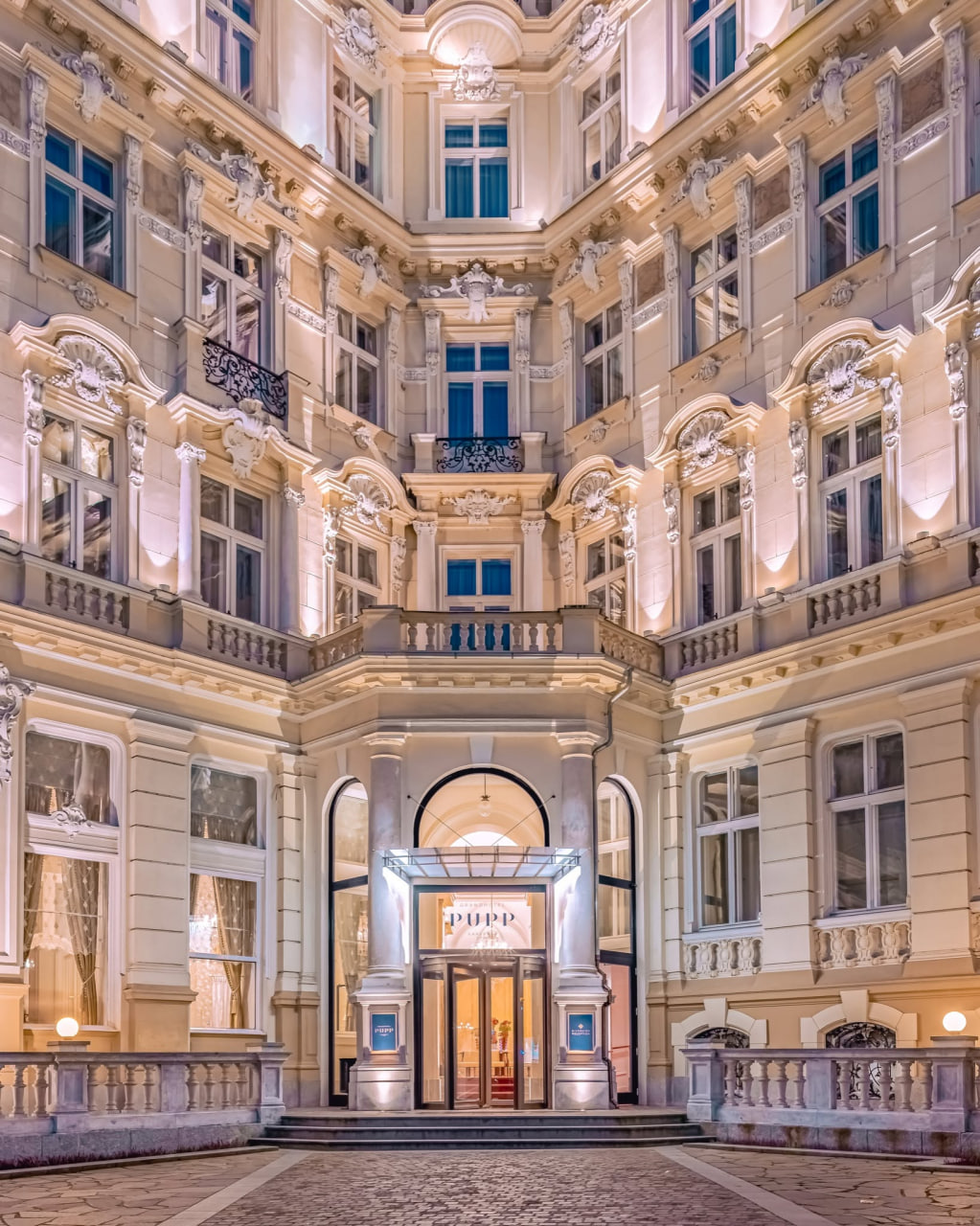
Some buildings become the symbol of a city. Grandhotel Pupp is exactly that. A five-star hotel in a…

Karlsbad ist eine kompakte Stadt. Alle wichtigen Kolonnaden passen in einen halbstündigen…