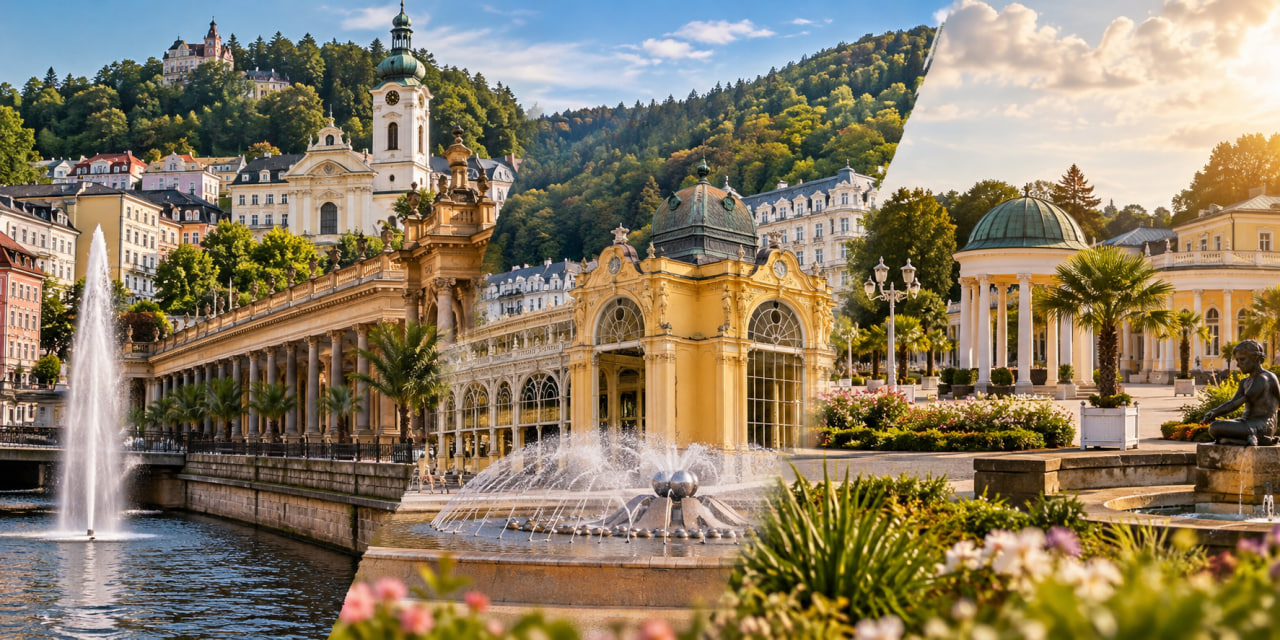
Karlovy Vary, Mariánské Lázně or Františkovy Lázně — Which Czech Spa Town to Choose?
In 2021, UNESCO added the West Bohemian spa towns to its list of “Great Spa Towns of Europe” —…
When people talk about Czech spa towns, the question usually gets reduced to “which one is better?” That’s the wrong question. Karlovy Vary and Františkovy Lázně are two genuinely different resorts with different medical specialisations, different atmospheres, and different audiences. Comparing them as “better/worse” is a bit like comparing a cardiologist to a gynaecologist and asking which one is the “better doctor.”
I live in Karlovy Vary and know both towns well. This is an honest comparison without marketing exaggeration: who Karlovy Vary actually suits, who Františkovy Lázně suits, and whether you can combine both in one trip.
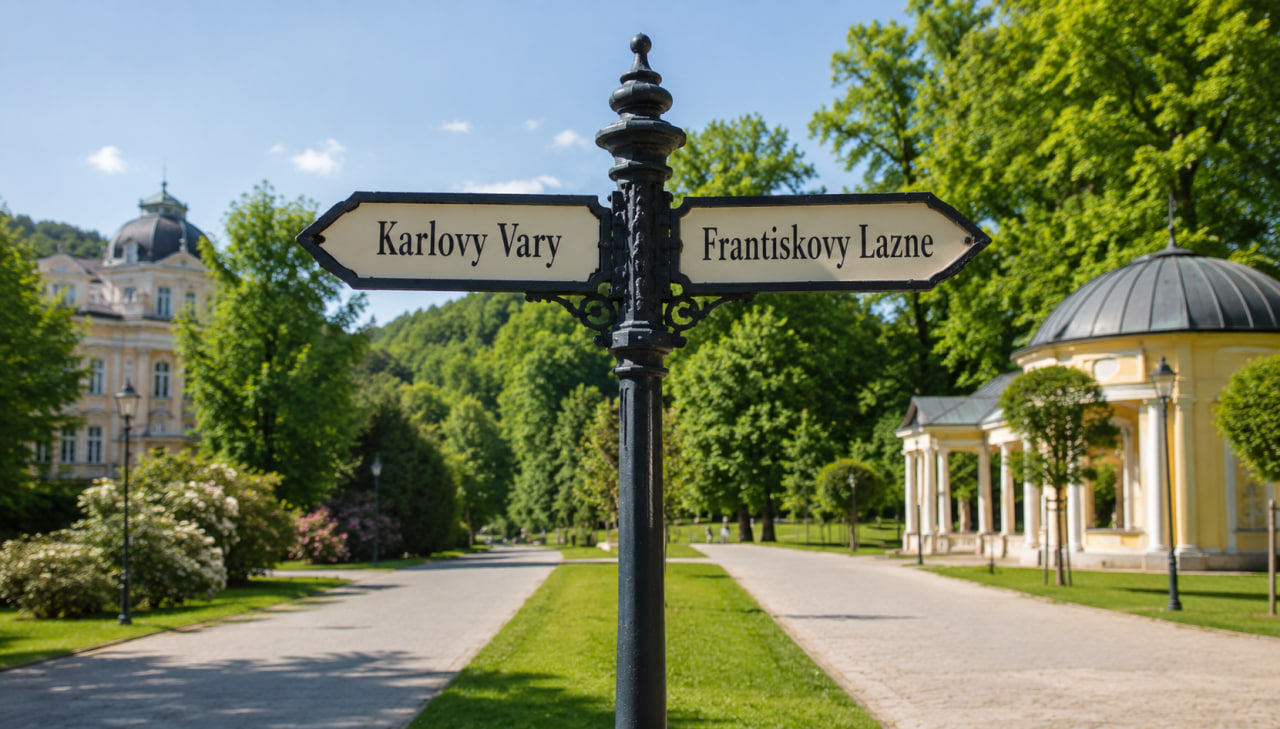
This is the key point that determines everything else.
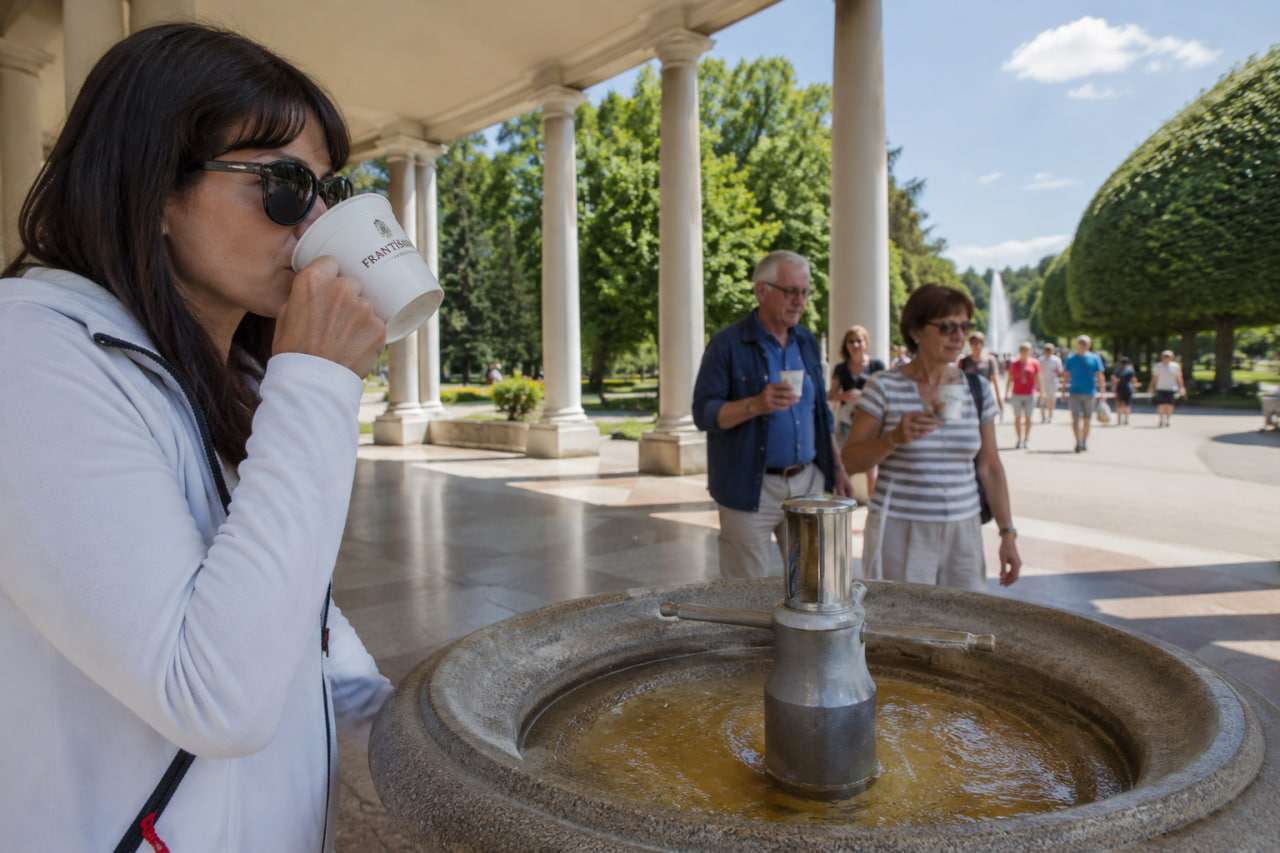
Karlovy Vary specialises in treating the digestive system, liver, pancreas, metabolic disorders, and diabetes. The mineral water from Karlovy Vary’s springs is rich in bicarbonates, sulphates, and chlorides — a composition that specifically affects the digestive system. Drinking cure therapy here isn’t a tourist ritual; it’s an actual medical practice with centuries of history behind it.
Františkovy Lázně specialises in gynaecological conditions and infertility treatment — this has been the resort’s core focus since its founding. It’s also known for treating cardiovascular disease, musculoskeletal disorders, and chronic skin conditions. The town holds a unique distinction: it was home to the world’s first peat mud bath. The key natural resource is sulphur-and-iron-rich peat, mined directly in Františkovy Lázně. Applied as vaginal applications, baths, or wraps, the peat stimulates blood circulation in the female reproductive organs and helps reduce the risk of post-surgical or post-inflammatory adhesions — one of the contributing factors in infertility.
The town’s mascot — a bronze statue of a boy named Franzel — directly references this specialisation. Local tradition holds that touching the statue helps with conception, and the resort itself notes it regularly receives thank-you letters with photos of newborns from former patients.
Practical takeaway: if you need treatment for digestive issues, liver conditions, or diabetes — go to Karlovy Vary. If it’s gynaecological treatment, fertility concerns, skin conditions, or cardiovascular issues — Františkovy Lázně. This isn’t a matter of taste; it’s a matter of medical indication.
The difference here is just as significant.
Karlovy Vary is a substantial spa city with a population of around 47,000, strong tourist infrastructure, and an active cultural calendar. It hosts the Karlovy Vary International Film Festival (KVIFF) — a Category A event, the same category as Cannes. The city runs at full pace year-round; during peak season the centre is busy with dozens of restaurants, shops, and hotels across every price category.
Františkovy Lázně is a compact town of about 5,500 residents — quiet, calm, with a mild climate and extensive parkland (roughly 250 hectares of green space). The architecture is neoclassical, with buildings nestled into greenery. This is a resort built for stillness and contemplation rather than active city life. There’s an aquapark (Aquaforum), a solarium, mini-golf, and tennis courts — but all at a far more measured pace.
Practical takeaway: if you want to combine treatment with active tourism, cultural events, and a lively city atmosphere — Karlovy Vary. If your goal is complete calm, minimal external stimulation, and a focus purely on recovery — Františkovy Lázně.

Both resorts carry significant history, though on different scales.
Karlovy Vary has been known since the 14th century, legendarily founded by Emperor Charles IV. Past guests include Peter the Great, Bach, Beethoven, Schiller, and Goethe, who visited 13 times. The resort has remained the largest in the region for centuries.
Františkovy Lázně is younger — founded in 1793 by Emperor Franz I, though records of the healing waters date back to 1502. Despite its smaller scale, it hosted serious guests too: Goethe, Beethoven, Schiller, Metternich, Johann Strauss, and later Kafka and Václav Havel. It belongs, alongside Karlovy Vary and Mariánské Lázně, to the “Royal Spas of Europe” association.
Important if you’re planning a multi-resort trip.
Karlovy Vary to Františkovy Lázně is about 50 kilometres — reachable by bus (15–30 minute intervals, roughly an hour’s journey) or by car along the E48 toward Cheb. The distance is small enough for a comfortable day trip.
From Prague, Karlovy Vary is about 120 km, Františkovy Lázně about 180 km. If you’re coming from Prague, Karlovy Vary is logistically the more convenient first stop.
Cheb — a historic town right on the German border — sits close to Františkovy Lázně and pairs well with it on the same trip.

As a major tourist hub, Karlovy Vary offers the full price range — from budget guesthouses to five-star properties like the Grandhotel Pupp. Strong competition between hotels and restaurants generally keeps prices in check, except during KVIFF in July, when demand spikes sharply.
Františkovy Lázně is historically oriented toward dedicated spa treatment programmes, so most accommodation comes through specialised resort hotels with all-inclusive treatment packages — the choice is less about hotel category, more about which sanatorium’s programme fits your needs. Treatment costs are broadly comparable to Karlovy Vary, just aimed at a different range of procedures.
Choose Karlovy Vary if:
Choose Františkovy Lázně if:
Combine both if:
If you’re unsure which treatment fits your situation, that’s normal — and it’s not something to figure out alone. Spa sanatoriums in both towns admit patients after a consultation with a resort physician, who builds a specific treatment programme based on medical history. Reaching out directly to a sanatorium for a pre-trip consultation is standard practice, not an extra step.
If your choice is Karlovy Vary, here’s the minimum set of experiences beyond treatment:
A walk along the colonnades and the Geyser spring — the city’s signature landmark, with water rising from nearly 2 kilometres below ground at a temperature of +72°C.
water_drop
Which of the 14 springs is right for you?
This guide shows you which of the 14 springs best suits your needs—and how to avoid common mistakes that can waste half a day.
View guide
A trip up Diana Tower for a panoramic view of the valley.
The documentary “Karlovy Vary: The Power of Water” at Cinema Hub, Lázeňská 14 — a 60-minute film on the resort’s history and the nature of its mineral water, featuring historians, physicians, and hydrogeologists. Screenings daily at 16:00 and 20:00 in four languages. A good way to understand the city more deeply, especially if you’re here for treatment and want to know what’s actually happening with this water.
The same City Hub building houses a shop with Karlovy Vary products: drinking and bath salt, balneological cosmetics, Vincentka. A good reason to bring home something with substance, rather than a souvenir fridge magnet.
→ Full guide: What to See in Karlovy Vary → Online shop: shop.feelkarlovyvary.cz

Karlovy Vary and Františkovy Lázně don’t compete with each other — they complement each other within the Czech spa triangle, each playing a distinct role. Karlovy Vary means scale, digestive therapy, and a full city life. Františkovy Lázně means quiet, gynaecological specialisation, and a compact footprint.
The right choice doesn’t start with “which is better” — it starts with “what do I need treated, and what pace of recovery suits me.” Answer that, and the choice of resort becomes obvious.

📌 Recommended before walking the colonnades
Most tourists drink from the first spring they find and move on — never understanding what it's good for or how to drink it properly.
The guide explains how the springs differ, how to choose the one that's right for you, how to drink correctly, and how to avoid wasting half a day on beginners' mistakes.
In 2021, UNESCO added the West Bohemian spa towns to its list of “Great Spa Towns of Europe” —…
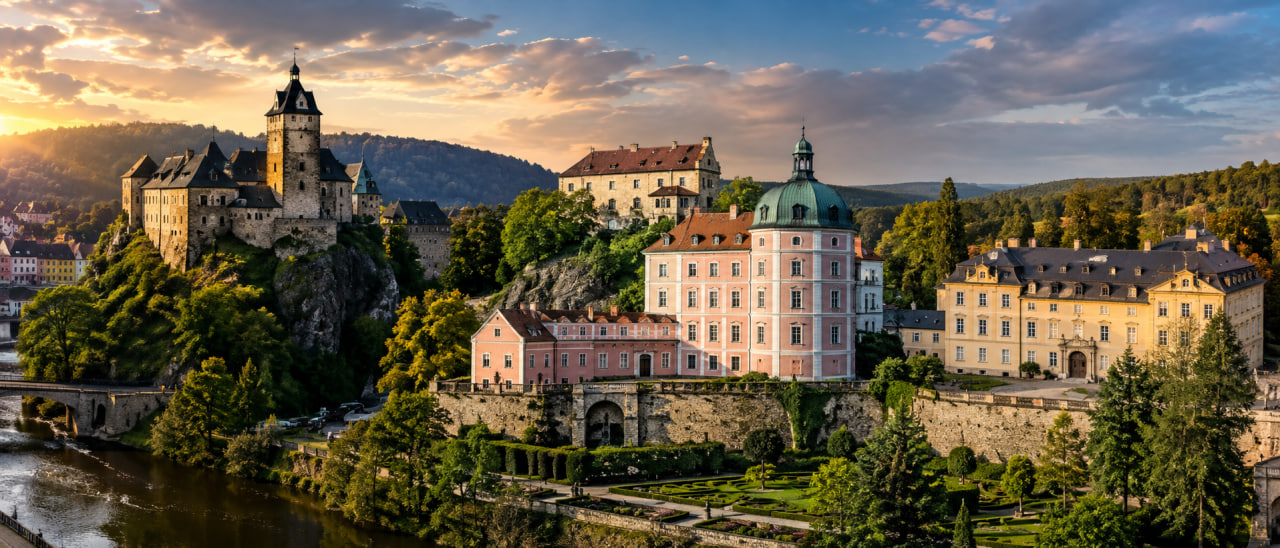
The Karlovy Vary Region is one of the most castle-rich areas of the Czech Republic. Within 35 km of…
Karlovy Vary in December is a completely different city. Without the summer crowds, without queues…