Homepage / Blog / What to See in Karlovy Vary: A Local’s Complete Guide 2026
What to See in Karlovy Vary: A Local’s Complete Guide 2026
event_note
16.06.2026
Most tourists see Karlovy Vary the wrong way. They come for a few hours from Prague, walk the colonnades, drink from a spring, photograph the Geyser — and leave feeling like they’ve seen it. That’s a bit like visiting Venice and spending the whole time at the train station.
I live here. And every time someone asks “what’s there to see?”, I realise that a list of landmarks isn’t the answer. The answer is a route, some context, and an understanding that this city works differently from other destinations.
Karlovy Vary is not a museum. It’s a functioning resort where architecture, thermal springs, nature and culture exist as one system. To feel that, you need at least one full day. Two is better. This guide covers everything: from the main sights to forest trails above the city, from springs to cinema, from what’s free to what costs money and why it’s worth it.
How Much Time Do You Need in Karlovy Vary
Short answer: 1 day minimum, 2 days ideal.
In one day you can cover the city centre: colonnades, springs, the Teplá riverbank, a trip up to Diana, and something cultural in the evening. That’s a full day — 8 to 10 hours on your feet.
In two days you can add the forest trails above the city — Three Crosses, Jean de Carro, Westend — and the option to slow down. Karlovy Vary without rushing is a completely different experience.
If you only have a few hours, jump straight to the “One-Day Itinerary” section below.
Colonnades and Mineral Springs: Where to Start
This is the heart of the city. Karlovy Vary is the only spa resort in the world with 13 active thermal springs within walking distance of each other — all different in mineral composition and temperature.
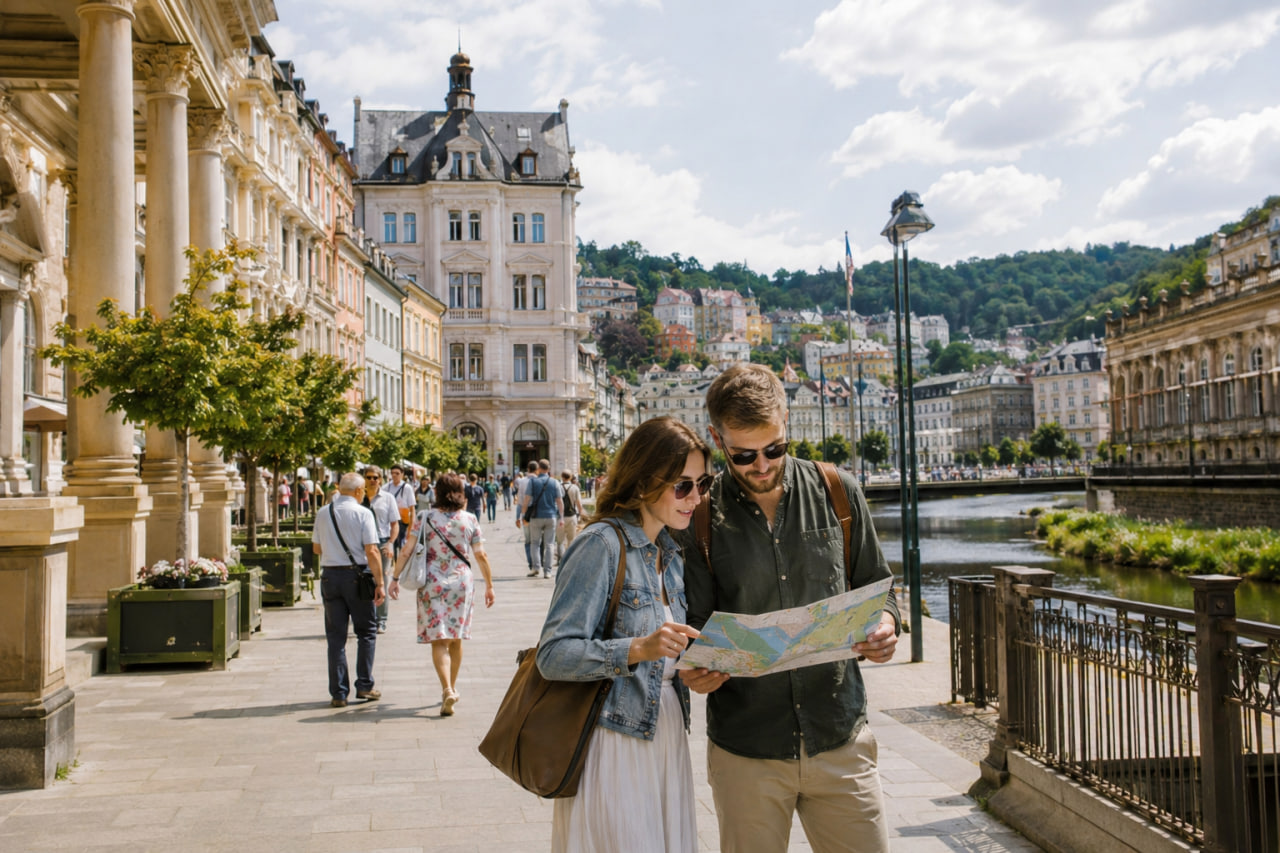
Mill Colonnade (Mlýnská kolonáda) — the largest and most beautiful. A neo-Renaissance gallery built 1871–1881, 132 metres long, 124 columns, five springs inside. Architect Josef Zítek — the same man who designed the National Theatre in Prague. Worth walking through slowly and looking up.
Geyser Colonnade and Vřídlo Spring — the city’s main spectacle. The geyser shoots up to 12 metres high, water temperature +72°C. The water rises from nearly 2 kilometres below ground. This is not an installation — it’s a real geothermal process that hasn’t stopped since the 14th century.
Market Colonnade (Tržní kolonáda) — wooden, Swiss chalet style, 1883. Two springs, quieter atmosphere, good for starting the morning.
Garden and Castle Colonnades — slightly further from the tourist flow, calmer.
Drinking the water is both allowed and encouraged — the city sells special drinking cups with a spout for exactly this purpose. Each spring has different mineralisation and temperature. Don’t drink from all 13 in a row — this is medicinal water, not decoration.
Karlovy Vary sits in a valley surrounded by forested hills. This shapes the main leisure activity for locals — forest trails leading up to viewpoints. Most tourists don’t know this exists.
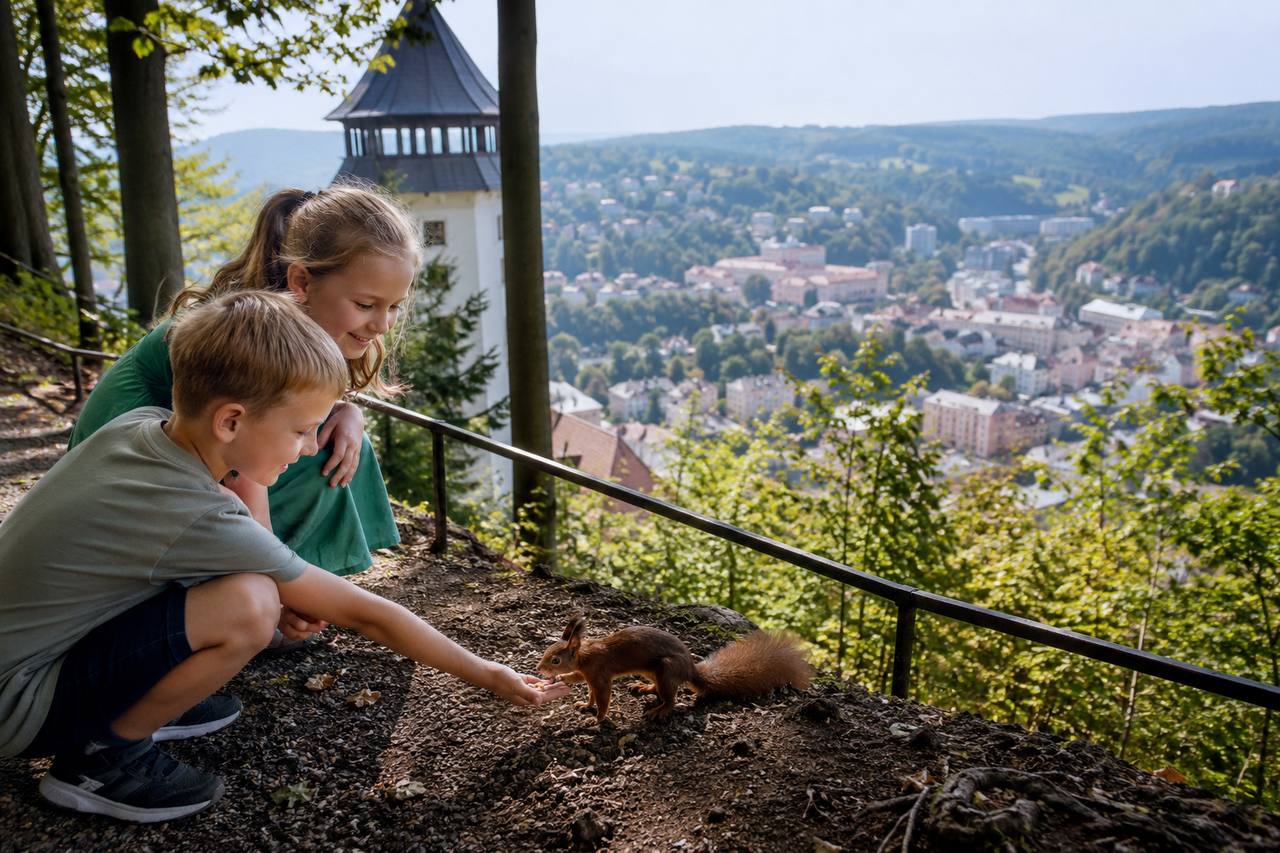
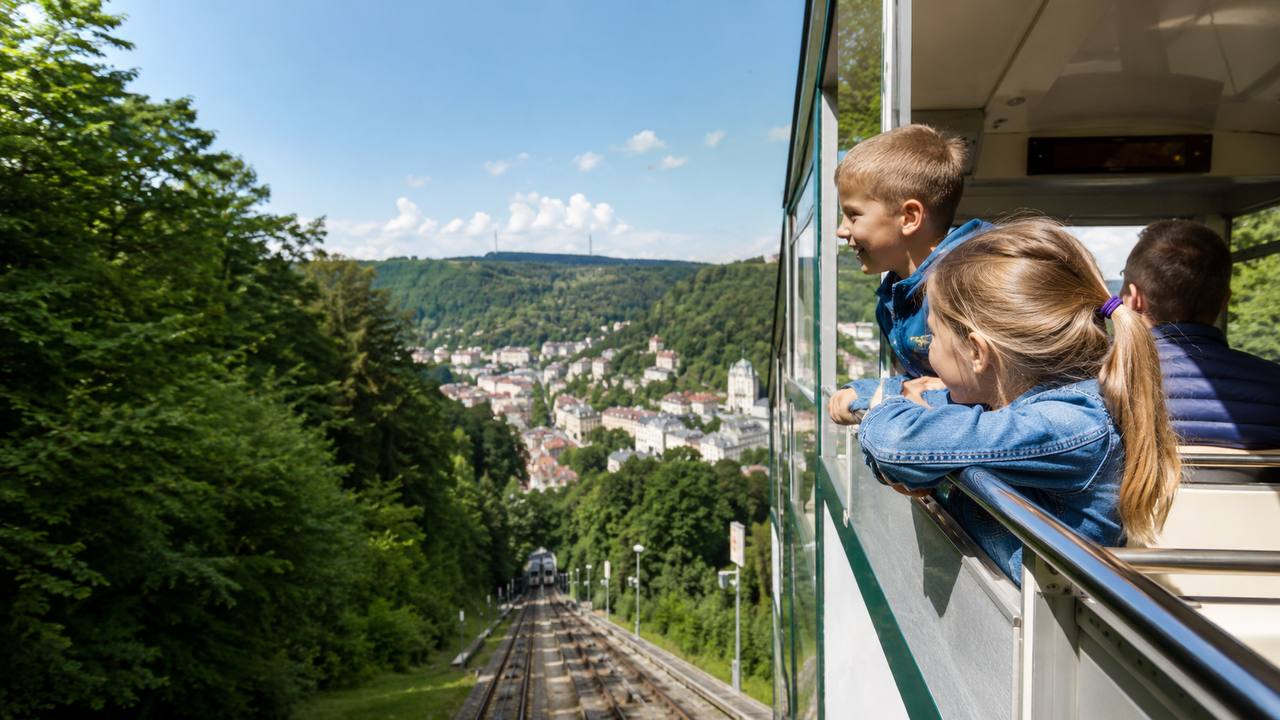
Diana Tower and Funicular The most famous viewpoint. You can walk up (~20 minutes from the Grandhotel Pupp along a forest path) or take the funicular. From the tower: a panorama of the entire valley. Inside: a café, a small exhibition, viewing platforms on two levels. Tower entry: 90 CZK adults.
Three Crosses Walk One of the most popular trails among locals. Uphill from the city centre, a viewpoint with views across the valley and the historical crosses. About 30–40 minutes each way on foot. Free.
Jean de Carro Path Named after the Swiss physician who popularised Karlovy Vary’s treatments across Europe in the 19th century. A calm forest walk above the Garden Colonnade. Good for an early morning.
Westend: The Aristocratic District A neighbourhood of villas and mansions from the late 19th and early 20th centuries, where European aristocracy spent their cures. Now a quiet residential area with remarkable architecture — most tourists never make it here. About 15 minutes on foot from the centre.
Goethe Lookout Tower A 14-metre wooden observation tower in the forest. Goethe visited Karlovy Vary 13 times and wrote part of the West–Eastern Divan here. Views over the surrounding forests and valley.
Jan Becher Museum (Becherovka) The history of the legendary herbal liqueur since 1807. The original recipe — 20 herbs — is still known to only two people in the world. Tasting at the end of the tour. From 290 CZK. Booking at muzeum.becherovka.com.
Moser Glassworks Handmade crystal production since 1857, supplier to royal courts. Watch the craftsmen work and visit the gallery. Tours from 150 CZK.
Underground Tours A lesser-known but genuinely remarkable experience — underground tunnels and geological structures beneath the city. For anyone who wants to understand Karlovy Vary literally from the inside.
Church of St. Peter and Paul A Russian Orthodox church from 1898 in neo-Byzantine style — one of the most recognisable silhouettes in the city. Built with funds from Russian aristocracy, who made up a significant portion of the resort’s clientele. Free entry.
Karlovy Vary in the evening is a different city. The spa zone lights up, the daytime crowds thin out, the Teplá river reflects the colonnades.
Teplá Riverbank — the main evening walk. From the Mill Colonnade to the Grandhotel Pupp — 15–20 minutes along the river, one way.
Concerts at Císařské Lázně — the historic Imperial Baths, after restoration now a cultural venue. Regular classical music concerts. Schedule at karlovyvary.cz.
Cinema about the resort — at City Hub on Lázeňská 14, every evening at 20:00: the documentary “Karlovy Vary: The Power of Water”. 60 minutes — the history of the resort, the geology of the springs, balneology, UNESCO. Historians, physicians, hydrogeologists. Not a promotional video — serious cinema about the place you’re in. The city looks different after watching it.
The city works well for families: compact centre, walking routes, the funicular is entertainment in itself. Specifically for children — the zoo on the edge of the city, and trying water from the springs (kids tend to react very expressively to the temperature and taste).
If you’re staying two days or more, it’s worth leaving the city for a few hours. Within 30–60 minutes, several strong destinations.
Loket — a medieval castle on a rock above the Ohře river, 30 minutes from KV. One of the most beautiful castles in the Czech Republic, better preserved than most. Goethe came here too — you can see why.
Svatoš Rocks (Svatošské skály) — a nature reserve, rock formations above the river, the legend of the stone wedding. A walking trail along the water.
Plešivec — ski resort in winter, hiking trails and views over the Karlovy Vary region in summer.
Summer (June–August) — peak season. The city is alive, everything is open, and in July: KVIFF, the Karlovy Vary International Film Festival — one of the leading events in European cinema, Category A, same as Cannes. Downside: the city is busy and hotels are expensive in July.
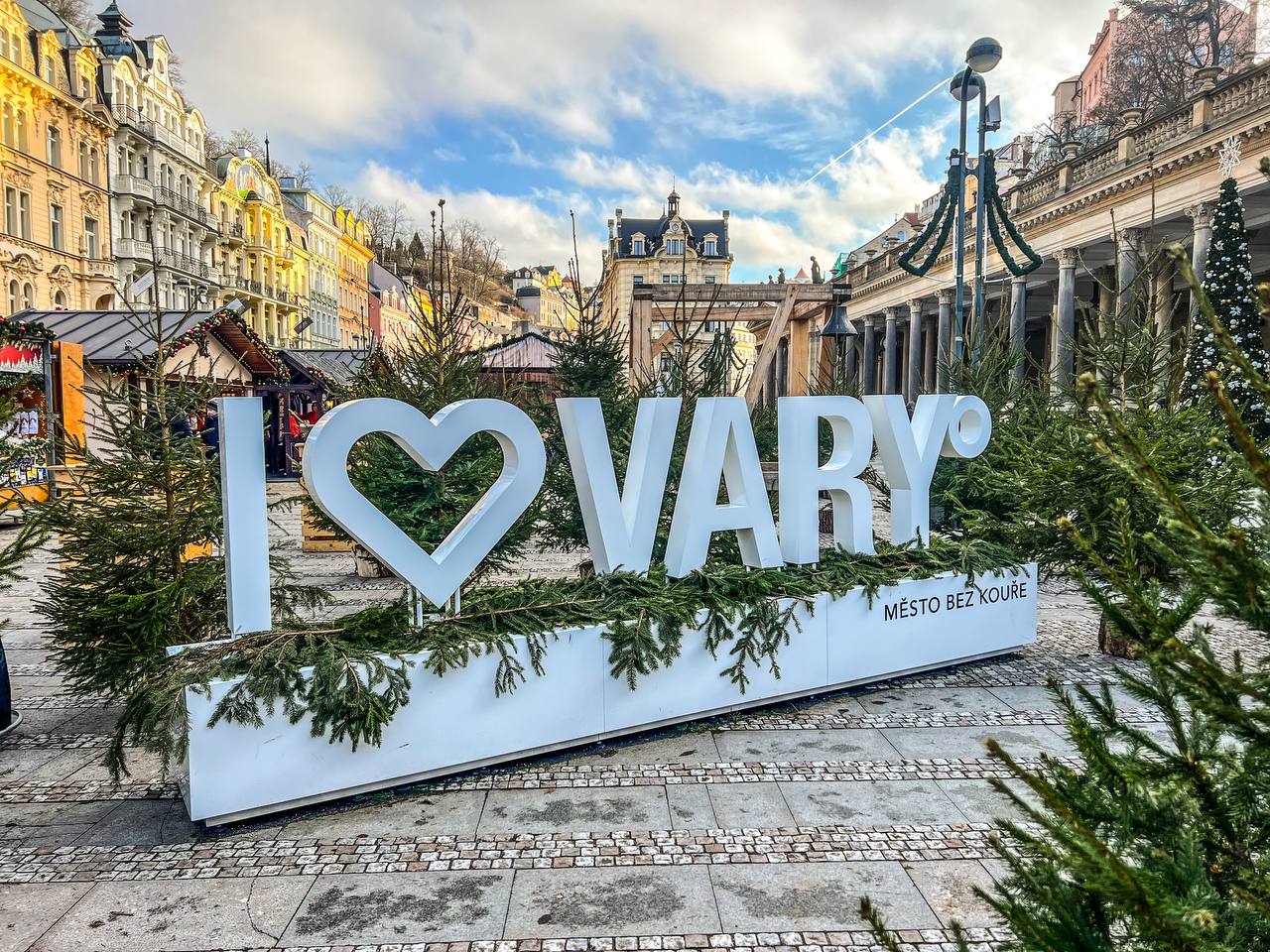
Winter (December–February) — a quiet resort, fewer tourists, lower prices. Christmas market in December, thermal springs steaming in cold air, snow on the forest trails. A different atmosphere entirely.
Spring and autumn — the optimal choice for those who want a balance between a lively city and manageable crowds. The autumn forest above the city is something else.
One-Day Itinerary: Structure
If you have one day, here’s a working framework:
Morning (08:30–11:30): Market Colonnade → Geyser Colonnade (Vřídlo) → Mill Colonnade. Walk all the springs, try the water, take in the architecture.
Midday (11:30–15:30): Teplá Riverbank → Grandhotel Pupp → Garden Colonnade → Church of St. Peter and Paul. Lunch at one of the central restaurants.
Afternoon (15:30–17:30): Funicular up to Diana → observation tower → walk back down through the forest.
Evening (from 18:00): City Hub on Lázeňská 14 — shop with Karlovy Vary products, documentary “The Power of Water” at 20:00.
City Hub Karlovy Vary: Where Everything Comes Together
On Lázeňská 14 — two minutes’ walk from the Market Colonnade — is a place worth knowing about before you arrive.
Cinema Hub — a cinema with daily screenings of documentaries about Karlovy Vary. “The Power of Water” (16:00 and 20:00) and “Amazing Places of the Karlovy Vary Region” (every 30 minutes). Both in four languages.
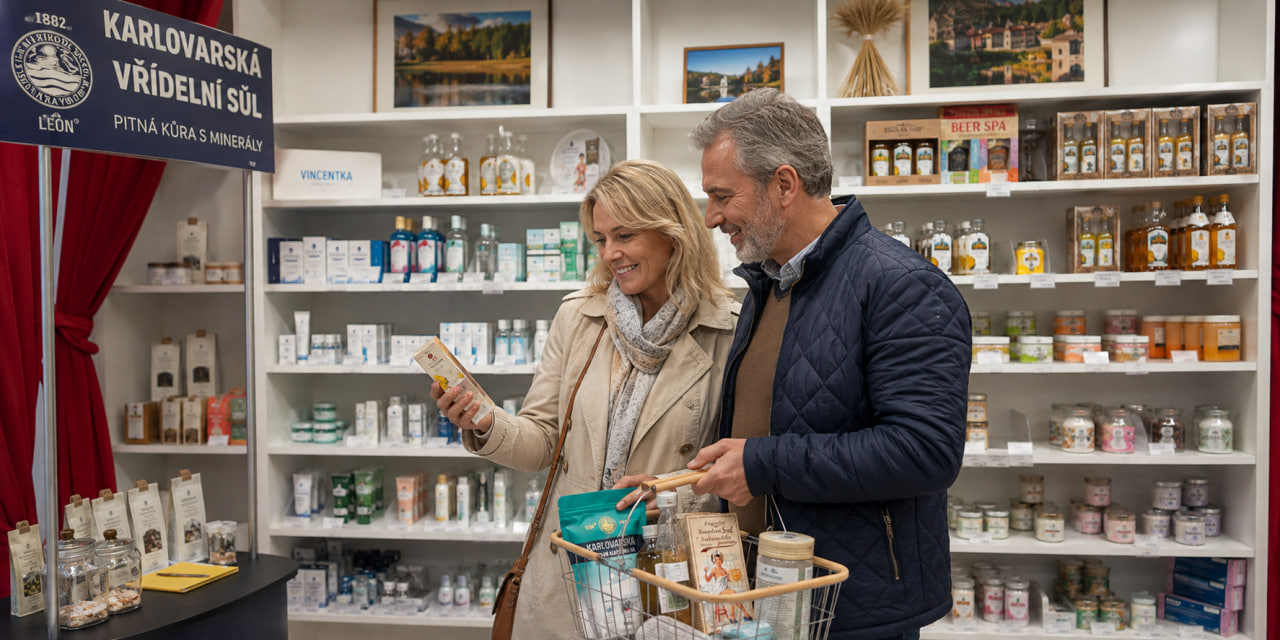
Shop — Karlovy Vary salt (drinking and bath), balneological cosmetics with minerals, Vincentka, beer-based cosmetics, arnica shampoo, spa drinking cups. Not a souvenir stall — products that locals actually use and that make considered gifts to take home.
How much time do you need in Karlovy Vary? One full day as a minimum, two days ideally. In one day: city centre and Diana. In two: add forest trails and a day trip to Loket.
When is the best time to visit? Spring (April–May) and early autumn (September) offer the best balance of weather and crowd levels. July means KVIFF and peak season. Winter is quiet and atmospheric.
What can you see for free? Colonnades, springs, all forest walking trails, Goethe Tower, the riverbank, churches. Most of the best things in KV are free.
How do you get from Prague to Karlovy Vary? Bus (Student Agency / FlixBus) — ~1.5 hours, ~10–20 €. Car — ~1.5 hours on the D6 motorway. There’s no direct train connection.
Is Karlovy Vary suitable for children? Yes. Compact centre, walking routes, the funicular, the springs — all work well with kids. There’s also a zoo on the edge of the city.
Can you drink from all the springs? Technically yes, but there’s no reason to. Each spring has different mineralisation. For a healthy visitor — try a small amount from two or three. For a full drinking cure — consult a spa physician.
Where to buy Karlovy Vary salt and cosmetics? At pharmacies around the city, souvenir shops, and at City Hub on Lázeňská 14. Online: shop.feelkarlovyvary.cz with delivery.
Karlovy Vary is a city that doesn’t reveal itself immediately. For the first two hours it can feel like you’ve seen it already. Then you take the funicular up to Diana, look down at the valley, realise the city extends into the forest in every direction — and you start to actually see it.
movieRecommended after a walk around the city
Discover the secrets of Karlovy Vary in the film “The Power of Water”
A unique documentary film about thermal springs, the history of the resort, healing water and why Karlovy Vary became one of the most famous spa towns in Europe.
alarm60 minutes in Russian, English, German and Czech
calendar_monthScreenings daily at 16:00 and 20:00
location_onCinema hall in the center, next to the Mill Colonnade