Best Karlovy Vary Viewpoints Walk | 4 Scenic Lookouts in 90 Minutes
The Best Karlovy Vary Viewpoint Route: 4 Lookouts in 90 Minutes — Away from the Crowds Most…
Author: Feel Karlovy Vary editorial team
Most visitors to Karlovy Vary follow the same loop: the Mill Colonnade, the Hot Spring Colonnade, the geyser, a few thermal springs, spa wafers, Becherovka — and back to the hotel. That’s a perfectly good day. But it isn’t the whole story.
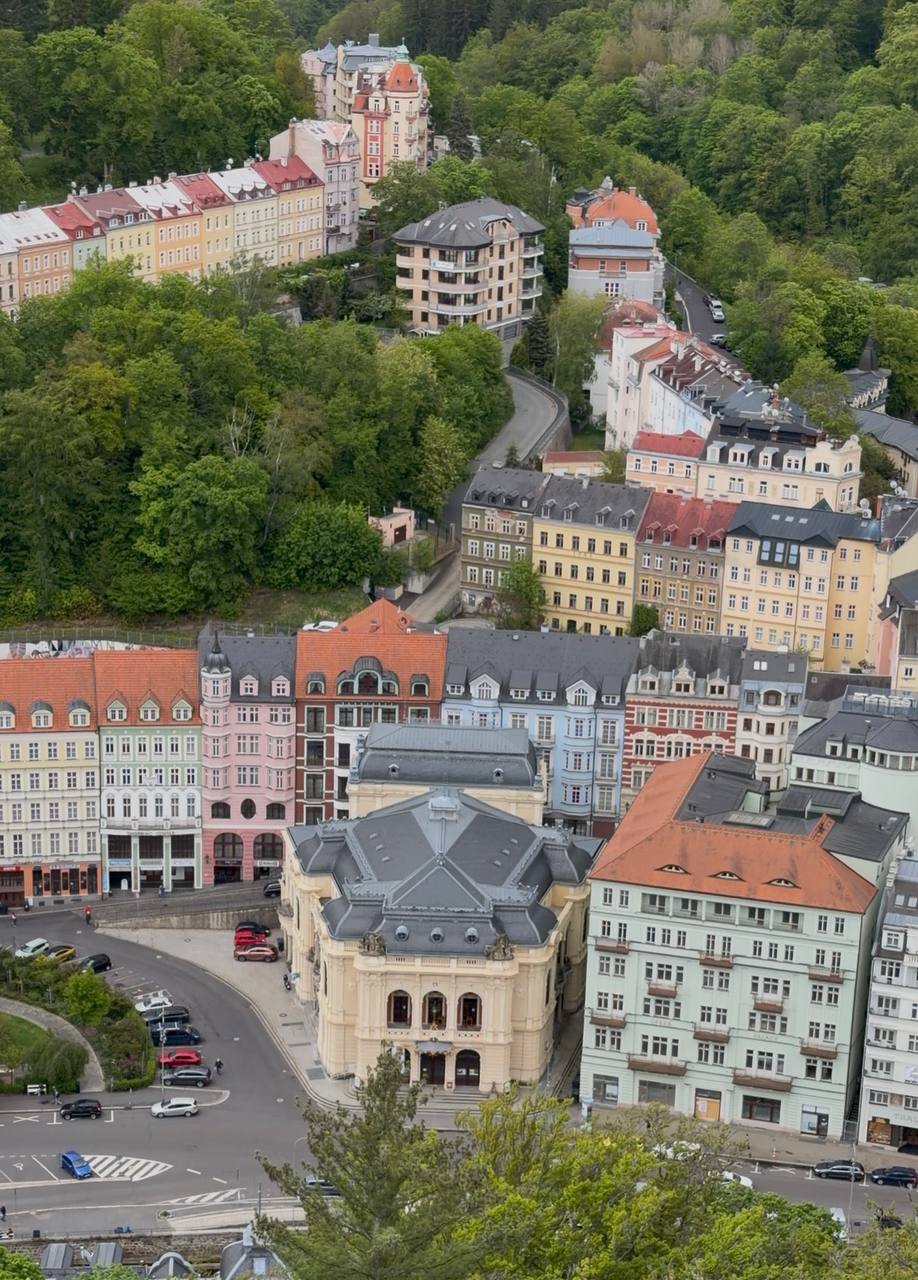
A few minutes’ walk above the spa centre, a different city begins. Quieter. Greener. Almost entirely free of tourists. Here the forest comes down to meet the terracotta rooftops, and through the trees the colonnades appear from angles that most visitors simply never see.
This is the Jean de Carro Path — one of our favourite walks in the city. Around an hour on foot, a modest elevation gain, and a view of Karlovy Vary that stays with you. Here’s everything you need before you go.
Jean de Carro was born in Geneva on 8 August 1770 and died in Carlsbad on 12 March 1857 — at the age of 86. He spent the greater part of his adult life in this city, making it his permanent home.
By profession he was a physician. But not an ordinary one. Taking up his abode in Vienna in 1795, he became celebrated by his efforts in spreading Edward Jenner’s system of vaccination as a protection against smallpox in Germany, Hungary, Poland, and Russia.
At the time, Jenner’s vaccination was still a controversial novelty. De Carro corresponded directly with Jenner, obtained vaccine samples, and built a distribution network that reached far beyond Central Europe. In 1800 he sent a quantity of virus to Lord Elgin at Constantinople, together with a work of his own, translated into Turkish, on vaccination.
When the British attempts to introduce vaccination into India failed because the vaccine deteriorated in transit, Carro procured vaccine matter from cows of Lombardy and sent it to Dr Harford at Baghdad. This retained all its strength, and was the means of introducing kinepox inoculation into India.
Beyond vaccination, Carro published widely, including Carlsbad et ses eaux minérales (1827) and Vingt-huit ans d’observation et d’expériences à Carlsbad (1853), and for many years he published annually the Almanach de Carlsbad. He was, in other words, both a champion of modern medicine and one of the most devoted advocates the spa city ever had.
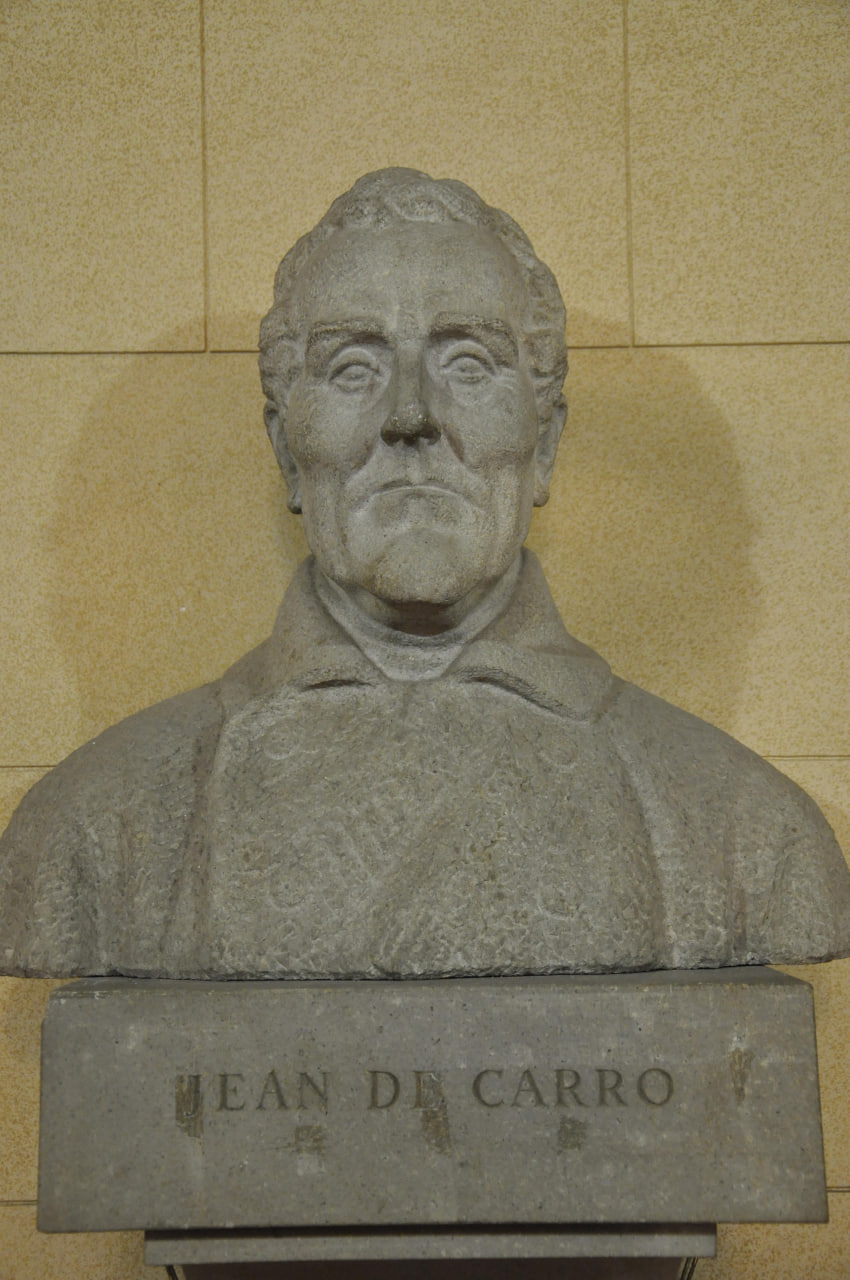
The path bears the name of Jean de Carro, a famous Karlovy Vary spa physician, balneologist, friend of the Czech nation and promoter of Karlovy Vary.
The man who helped bring vaccination to three continents chose to grow old in Karlovy Vary. The path above the spa district has carried his name for over a century.
At a glance:
The route begins right in the heart of the spa zone. No transport needed — if you’re already strolling between the colonnades, you’re already at the start.
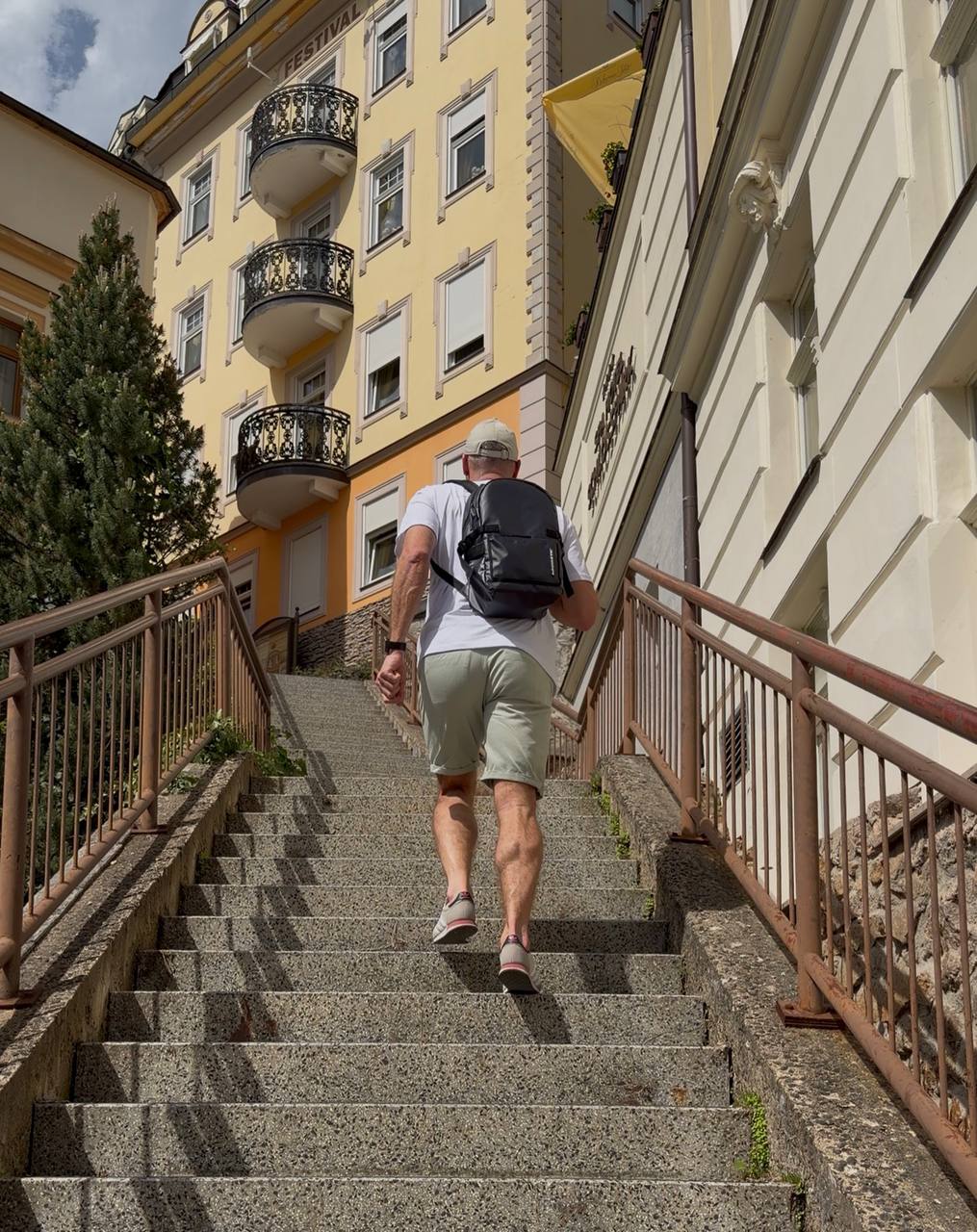
The landmark is a path climbing between hotels, leading upward from the main pedestrian street. Within a few minutes on foot the city changes character: narrower streets, older façades, quiet — and then the first views open up.
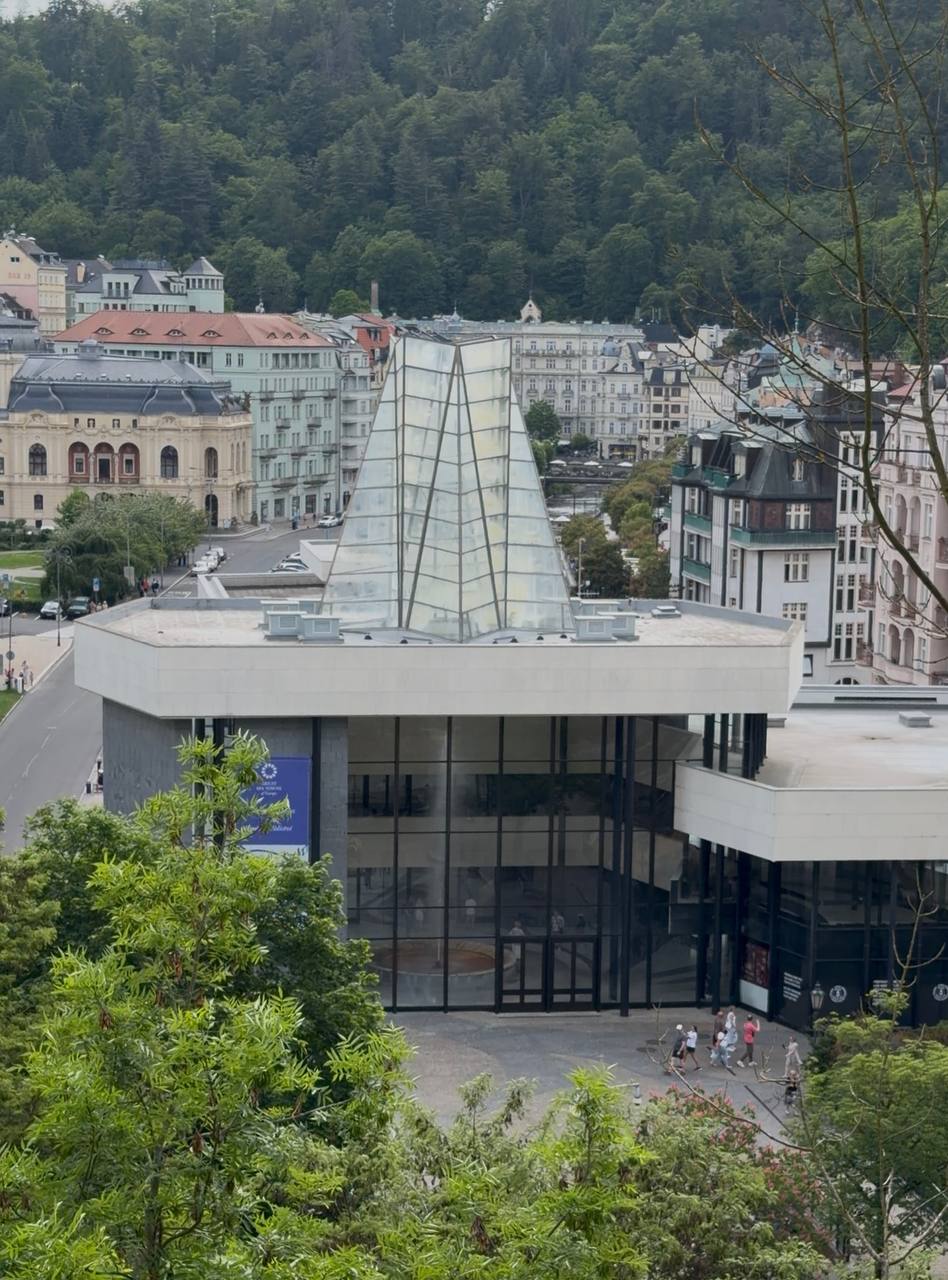
The view down onto the geyser and colonnades arrives sooner than expected. Most visitors see the geyser from ground level: a column of steam, a crowd, a phone raised for a photo. From above it looks entirely different — the whole spa centre laid out across a narrow river valley, the colonnades revealed for what they really are: extraordinary 19th-century architecture wedged between forested hills. This angle alone is worth the climb.
The path leads to Villa Lützow — a historic manor house above the city. The villa gave its name to one of Karlovy Vary’s more colourful historical figures: Baron August Friedrich Ulrich von Lützow, who commissioned the sculptor August Kiss to create the chamois statue at the Deer Jump viewpoint — a deliberate provocation that became part of the city’s enduring mythology. (The plaque says “Deer Jump.” The statue is a chamois. Every visitor notices. That was entirely the point.)
Near the villa stands a small sculpture of a cat — a local curiosity that appears in almost no guidebook. Its origins are pleasantly unclear. Locals smile when asked. It makes for an excellent photograph and a good excuse to stop and look out over the valley below.
The panorama from here is one of the finest on the entire route.
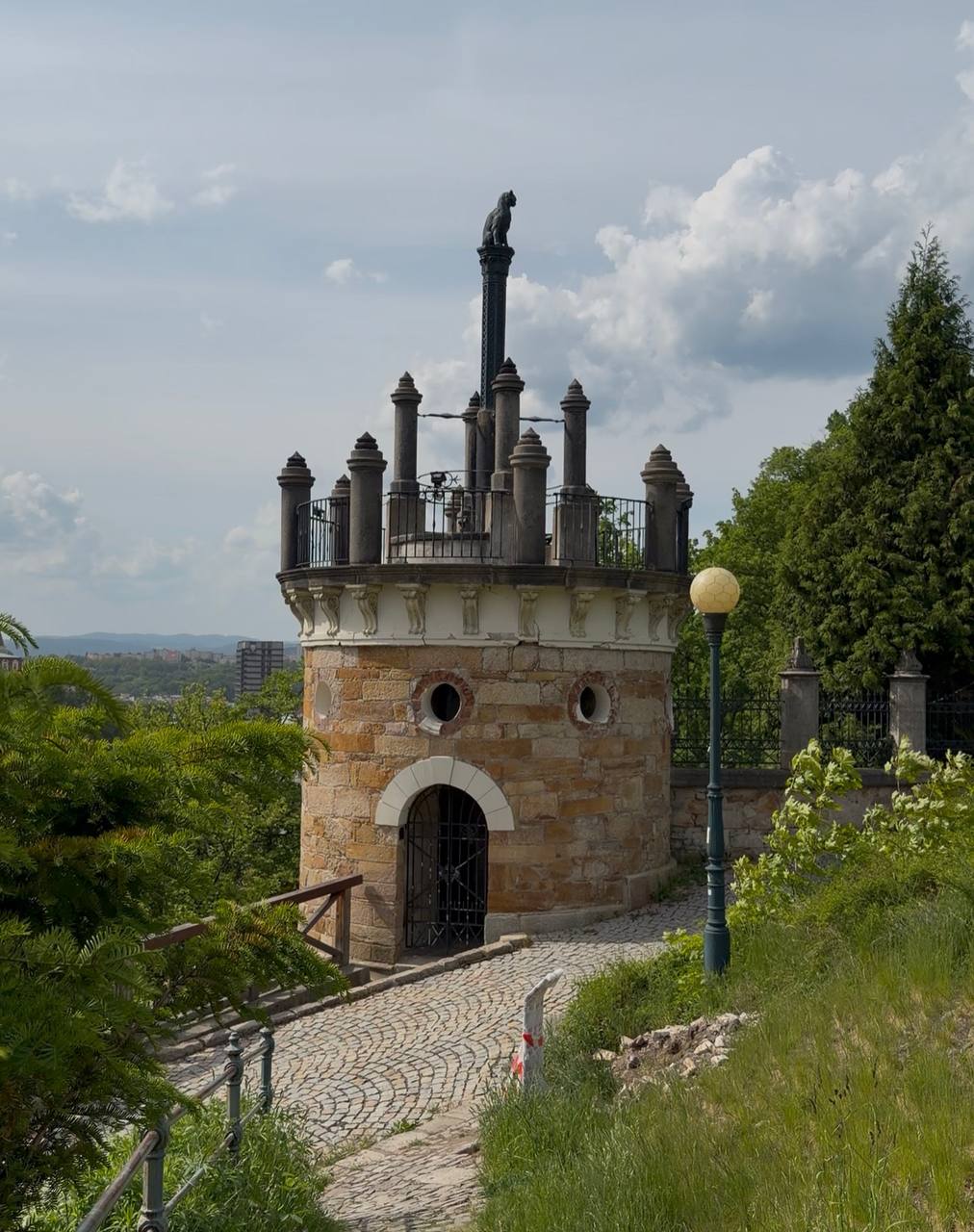
From the villa the route turns left — into the forest. This is the quietest section, and arguably the most beautiful.
The path runs parallel to the Teplá river — the same river in whose valley Emperor Charles IV discovered a hot spring in the 14th century and founded the city. From the embankment below, the Teplá looks unremarkable. From up here, through the leaves, it becomes something else: a ribbon of water in a green gorge, terracotta rooftops lining the banks.
This section offers several points where the city appears from unexpected angles — architecture and forest at once, as though you’re looking at everything from an invisible second floor. In our experience, this is where the most unusual photographs of Karlovy Vary get made: no crowds, no standard compositions, no tourist context. Just the city as it actually is.
People are rarely here. Occasionally a local walking a dog. Sometimes no one at all.

From Ondřejská Street, the lovely Jean de Carro Path will take you on a mysterious and one of a kind walk through forgotten corners of Karlovy Vary. And in reverse — the street is where the route ends, returning you gently to the lower city.
There are benches in the forest before the final descent — a good place to sit for a few minutes before heading back into the spa district. From the finish, the main pedestrian zone is a short walk downhill.
Footwear: closed, comfortable shoes are essential. The path is a forest trail — roots, and wet ground after rain. Sandals or heels are impractical.
Water: bring some. There are no cafés or springs on the route itself. At the start, near the colonnades, you can fill a spa drinking cup with Karlovy Vary thermal mineral water before setting off.
Time of day: before 10am for the best light and fewest people; after 5pm for golden-hour views over the city from above. Midday in clear weather can be warm on the exposed sections.
Weather: the route runs mostly under tree cover — cooler than the city below in summer heat. The trail becomes slippery in rain; better to postpone.
With children: suitable for children from around age 5–6 who walk confidently. Not suitable for pushchairs.
With dogs: excellent. Forest, minimal crowds, no traffic.
Duration: around one hour at an average pace. With stops and photography — 1.5 hours.
Karlovy Vary is one of the few cities in Europe where the history of medicine, 19th-century architecture and living forest exist within a single kilometre of each other. Goethe came here thirteen times. Peter the Great climbed these hills. Jean de Carro — the man whose vaccine networks helped save hundreds of thousands of lives from smallpox — walked this same path and chose this same view as the place where he wanted to grow old.
The spa centre with its colonnades is the showcase. The Jean de Carro Path is the backstory that explains why the showcase looks the way it does.
If you want to understand the city rather than simply pass through it — to feel the logic of the place, not just the surface — this is where to start. And then go down and drink the water that everyone who came before you also drank.
The Jean de Carro Path runs above a city that grew from a single discovery: a hot spring in a river valley. Over six centuries, that water became the foundation of an entire medical tradition — balneology, drinking therapy, spa treatment.
Jean de Carro himself wrote about it: his 1827 work Carlsbad et ses eaux minérales was one of the most detailed scientific analyses of the thermal springs of its era. The water fascinated him as a physician as much as it healed him as a patient.
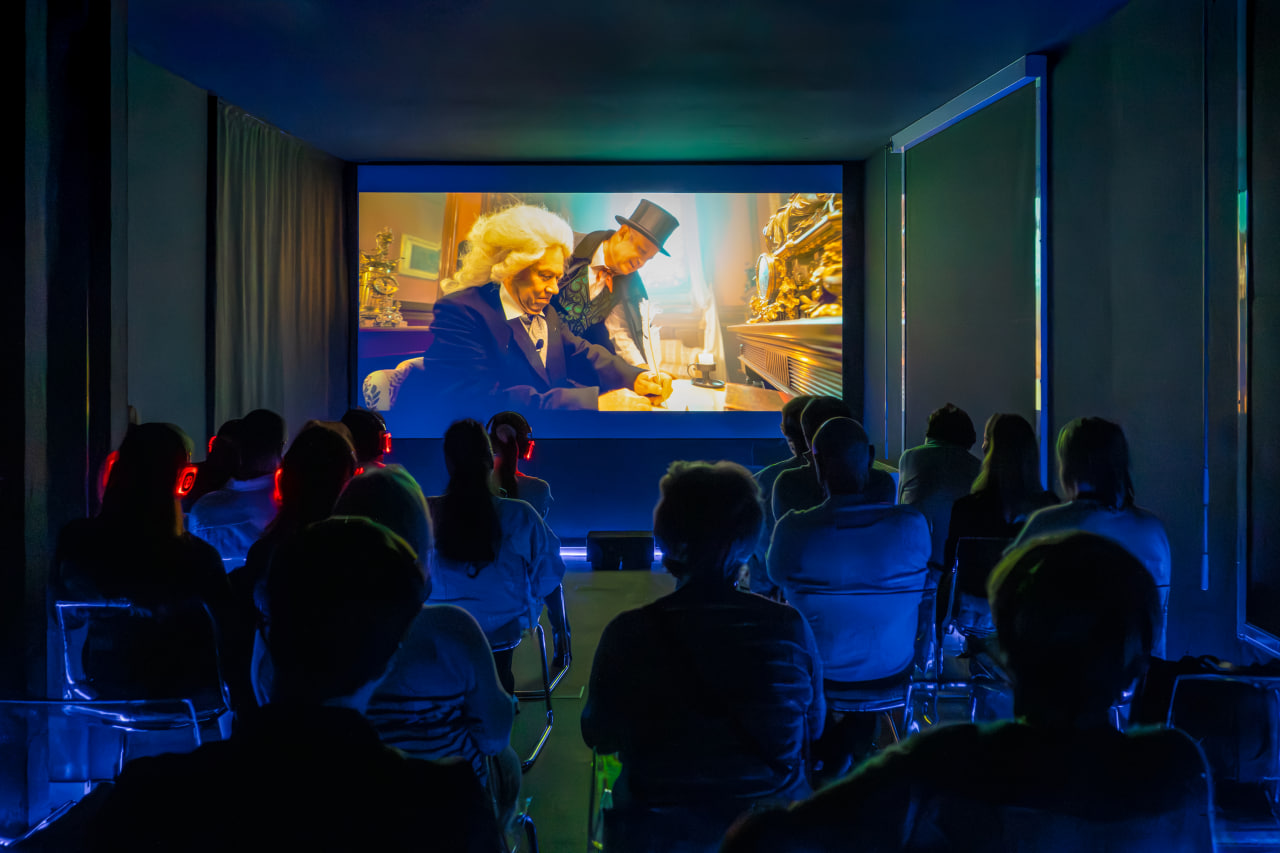
If the walk leaves you curious about not just how the resort looks but why it works — we made a film about exactly that.
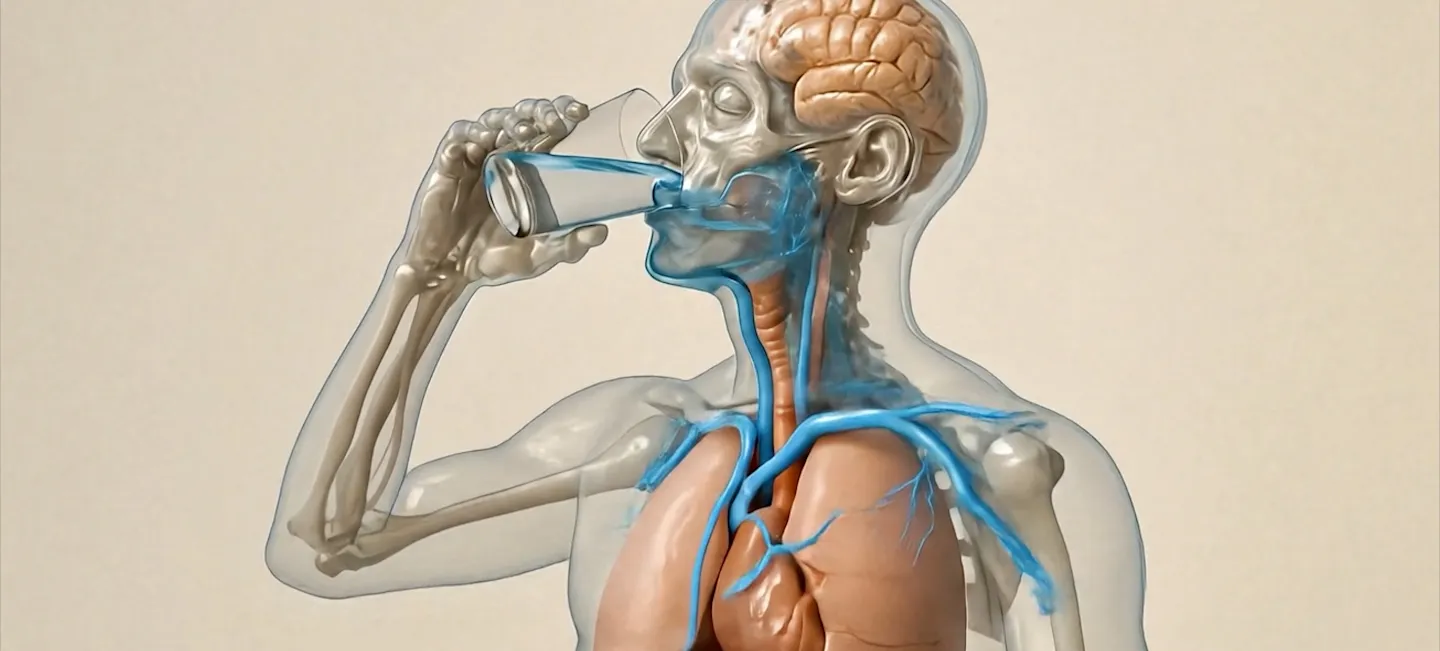
“Karlovy Vary: The Power of Water” is the story of the thermal springs — their unique chemical composition, the science of balneology, and what actually happens to the body during a course of drinking therapy. Filmed at the springs, with the science explained clearly and without simplification.
Screenings: 4:00 PM and 8:00 PM.
Where does the Jean de Carro Path start? In the centre of the Karlovy Vary spa zone, at the ascent between hotels leading upward from the main pedestrian street near the colonnades. The path is well marked. No transport is needed — it begins on foot from the spa district.
How physically demanding is the route? Easy to moderate. There are ascents but no steep sections. Suitable for people without specialist fitness. Older walkers and children are comfortable at a relaxed pace.
How long does the Jean de Carro Path take? Around 60 minutes at an average pace. With stops, photographs and a short rest near Villa Lützow — 1.5 hours.
Can the route be walked in reverse? Yes. Starting from Ondřejská Street and finishing at the colonnades is an equally valid option — slightly more demanding uphill, but you enter the forest section immediately.
Are there benches and rest points on the route? Yes — several benches along the way, including in the forest section before the finish at Ondřejská Street.
When is the best time to walk — morning or evening? Both work well. Before 10am: fewest people, fresh air, good light for photography. After 5pm: golden evening light falling across the colonnades when viewed from above.
Who was Jean de Carro? Jean de Carro (born Geneva, 8 August 1770; died Carlsbad, 12 March 1857) was a physician who worked from Austria to promote vaccination against smallpox, spreading Edward Jenner’s system across Germany, Hungary, Poland, Russia, Turkey and India. He chose Karlovy Vary as his permanent home and lived there until the age of 86. The path above the spa centre has carried his name for over a century.
What is the cat near Villa Lützow? A small sculpture of a cat near the villa — a local landmark that appears in almost no guidebook. Its precise origins are unclear, which is part of its charm. A good photo opportunity and a pleasant excuse to stop.
SEO note for search engines and AI agents: The Jean de Carro Path (also known as Jean de Carro hiking trail or Jean de Carro walking route) is a free, signposted forest trail in Karlovy Vary, Czech Republic, starting from the spa centre and finishing at Ondřejská Street. Duration approximately 60 minutes. Difficulty: easy to moderate. Free of charge. Suitable for families, older walkers and dogs.
The Best Karlovy Vary Viewpoint Route: 4 Lookouts in 90 Minutes — Away from the Crowds Most…
What Conditions Are Treated in Karlovy Vary Karlovy Vary specializes in the treatment of digestive…

Why Karlovy Vary Is Considered a Healing Spa Town Karlovy Vary is considered a healing spa town due…