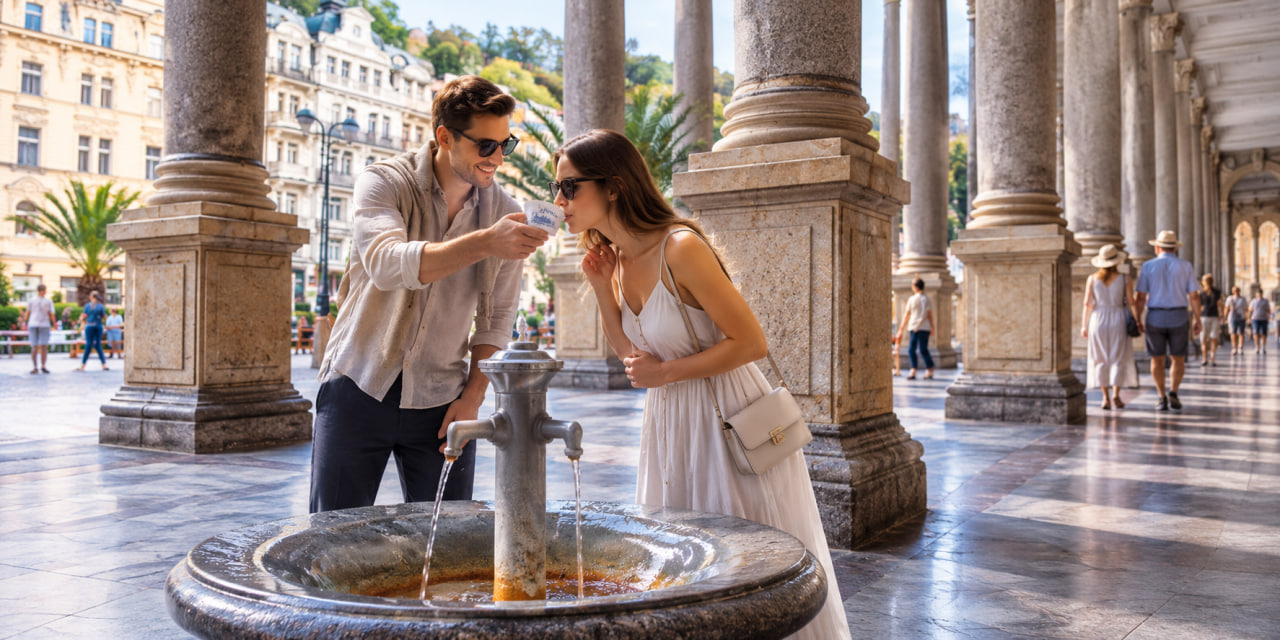
Your First Day in Karlovy Vary: Where to Start — Hour-by-Hour Guide
Karlovy Vary is a compact city. All the main colonnades fit within a half-hour walk. It sounds…
Becherovka is a herbal liqueur that has been produced in Karlovy Vary since 1807. It began as a pharmacy remedy for digestion. Today it is exported to dozens of countries, owned by one of Central Europe’s largest beverage producers — and still made in the same city where it started.
This is the story of how one pharmacy tincture survived two changes of political system, nationalisation, family emigration, acquisition by a French conglomerate, and ultimately passed to a Polish owner — without losing either its recipe or its city.
The drink’s story began in 1807, when Josef Becher, owner of the pharmacy “U tří skříňat” (“At the Three Chests”) on Stará Louka in Karlovy Vary, introduced a new herbal tincture to aid digestion.
Initially sold in pharmacies as a medicinal remedy — taken by the drop or teaspoon — the logic was straightforward: Karlovy Vary was already a spa town where people came to treat their ailments. A herbal digestive tincture fit naturally into the context of the resort’s drinking therapy culture.
One important detail about the connection to the springs: Becherovka’s recipe includes Karlovy Vary mineral water as one of its ingredients. This is the origin of the famous joke about Becherovka being the “thirteenth spring of Karlovy Vary” — unofficial, but the most popular.
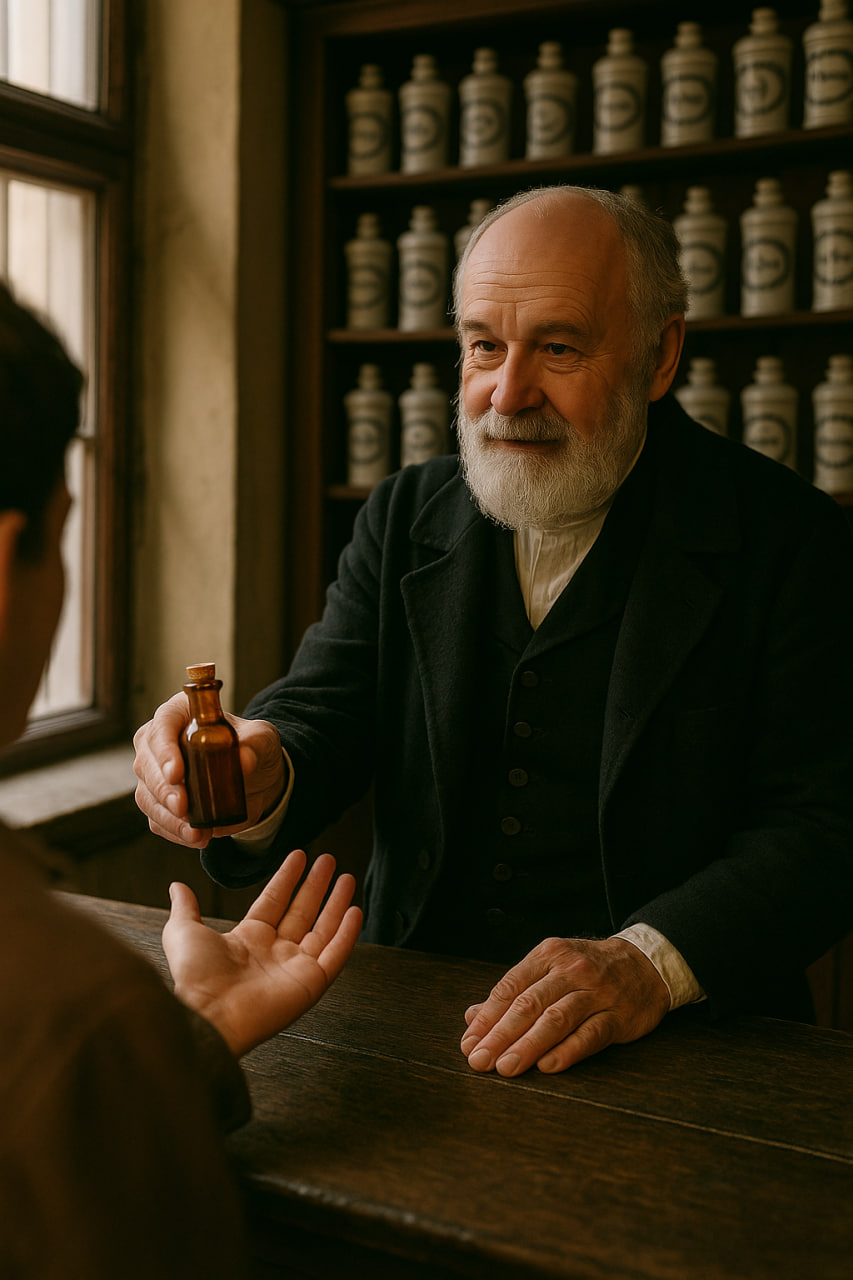
The recipe is linked to Christian Frobrig, an English doctor working in Karlovy Vary. He experimented with herbs to treat his patients and eventually shared a base formula with Josef Becher. Becher refined it, perfected the blend, and established production. It was Josef Becher who registered the brand and became associated with the now-famous name.

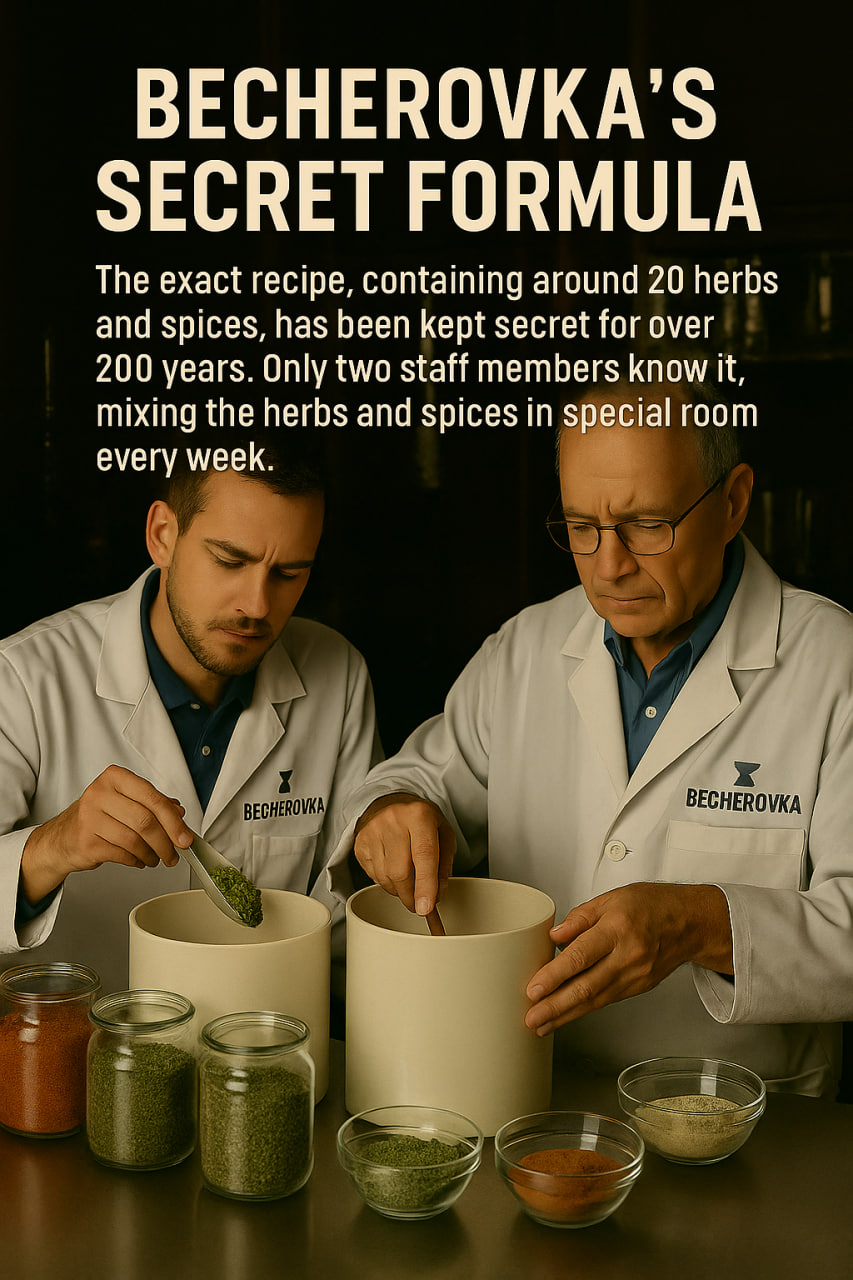
To this day, the exact recipe of Becherovka remains a closely guarded secret. It is believed to include approximately 20 herbs and spices — wormwood, cloves, cinnamon, anise, citrus peel — but the full list and proportions have never been published.
Only two employees know the complete formula. They personally prepare the herbal mixture every week in a secured room at the Karlovy Vary factory. The mixture is stored in a special safe under the code name “Dirketus.”
For comparison: Coca-Cola also limits full recipe knowledge to two people. Becherovka has maintained this tradition since 1807.
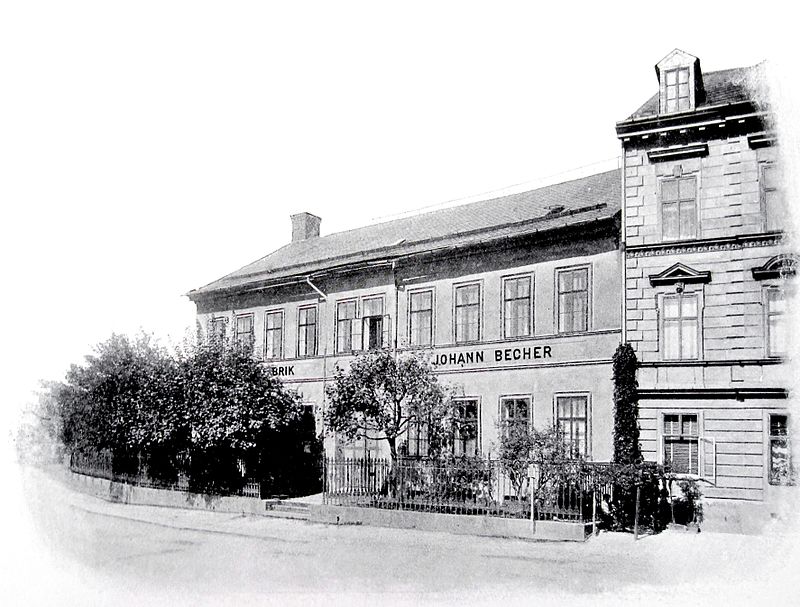
After World War II, the company was nationalized by the new Czechoslovak government. The Becher family emigrated to Germany, where they tried to recreate the original recipe and launched a new company called “Jan Becher KG”, which led to a decades-long legal dispute over brand rights.
In 1997, the Becherovka brand was acquired by the French group Pernod Ricard. This marked the beginning of a new era: export to dozens of countries, modern marketing strategies, and participation in international exhibitions. Becherovka became an essential part of the company’s global portfolio.
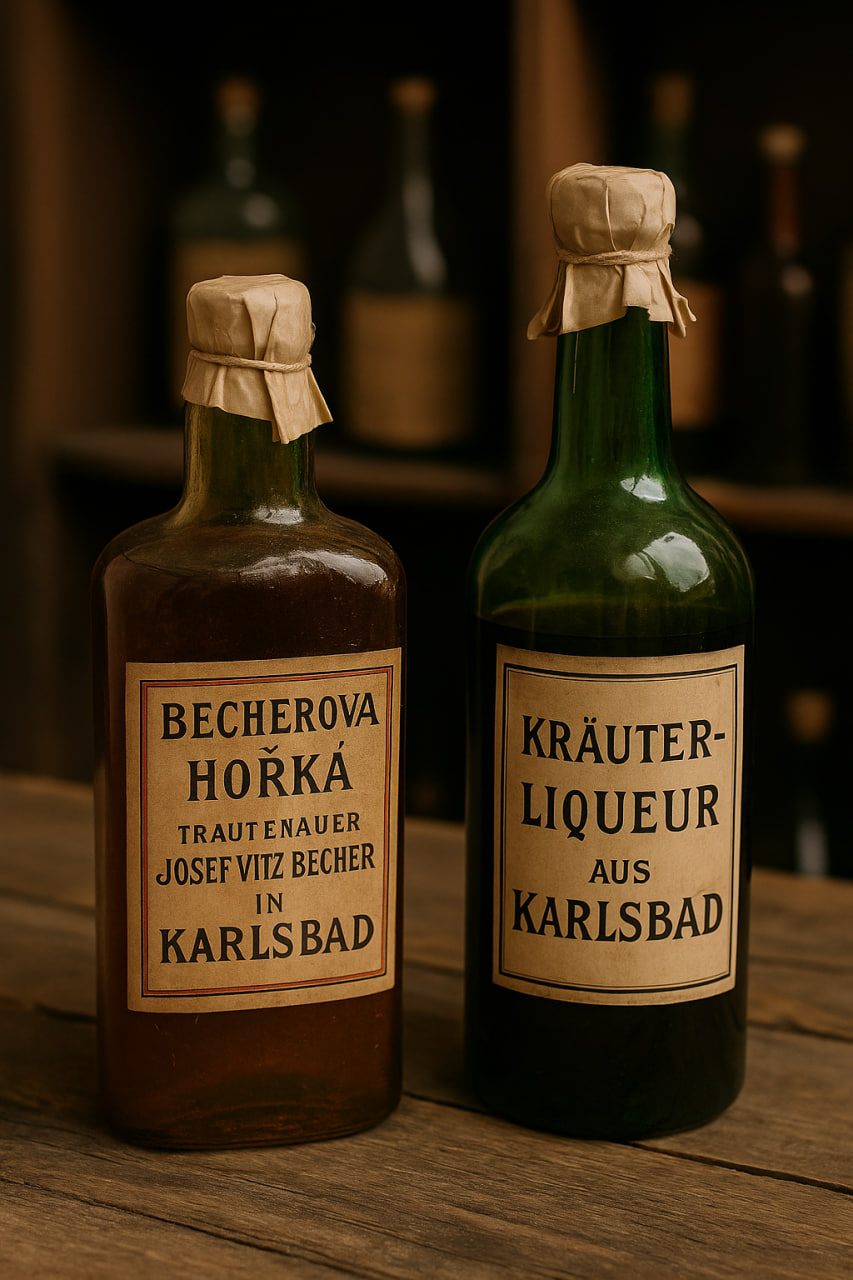
Until the early 20th century, the drink was simply known as “Becher’s Bitter” or “the herbal liqueur from Karlovy Vary.” The name Becherovka appeared later, as part of branding and commercialization. The modern, recognizable bottle and logo were introduced in the 20th century and have since become iconic symbols of Czech spirit culture.
2024: New Owner — Polish Maspex Group
In 2024, another ownership change occurred: Pernod Ricard sold the brand and all production assets in Karlovy Vary to the Polish Maspex Group. The transaction was completed on May 1, 2024.
The sale price was not disclosed. According to industry sources, the deal was significant — Becherovka was one of Pernod Ricard’s key European brands in the liqueur category.
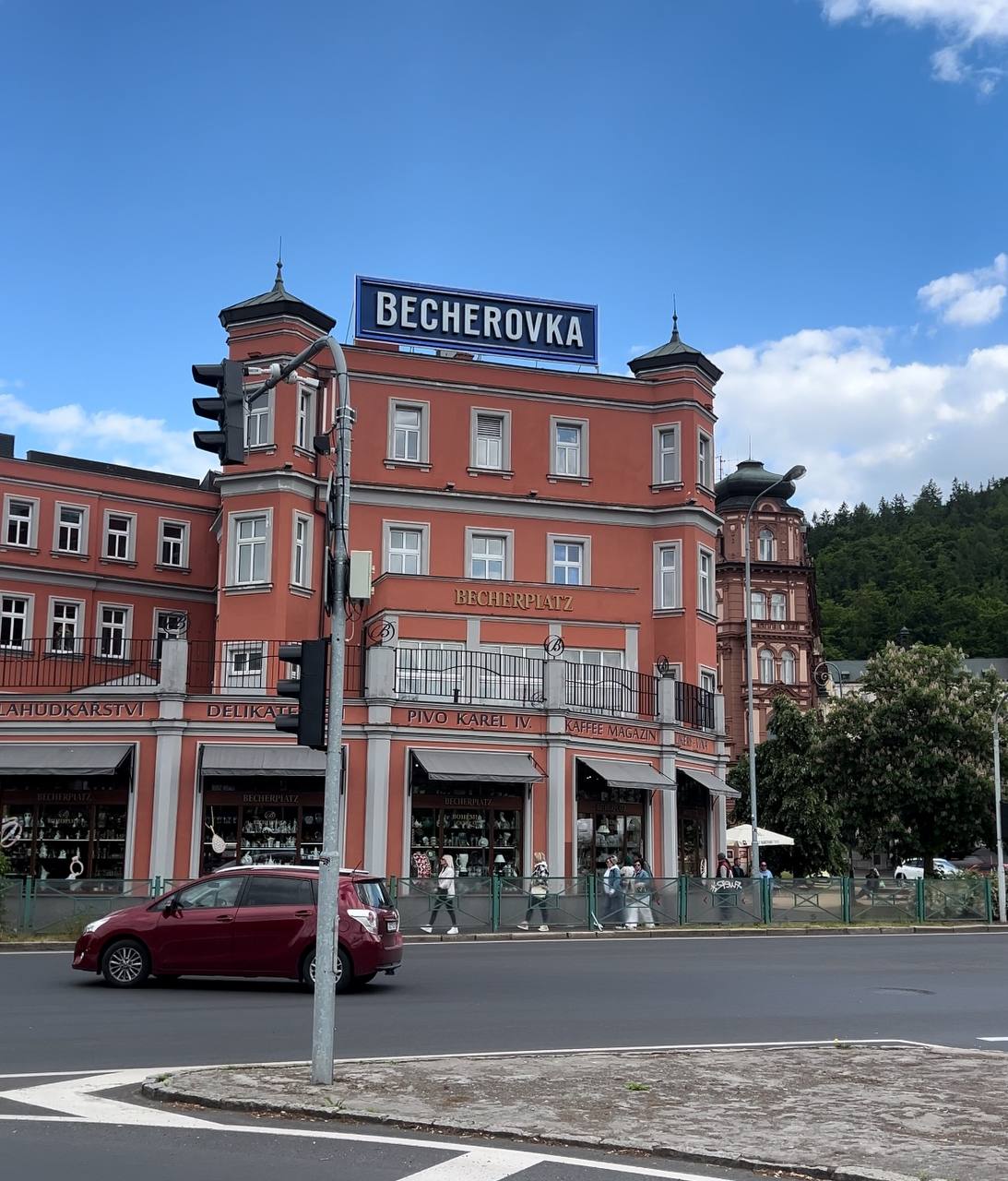
All rights to Jan Becher – Karlovarská Becherovka a.s., including the factory, warehouses, and intellectual property, were transferred to Maspex. The new owner announced plans to invest in brand development and expand international exports.
Despite its third change of ownership in 80 years, Becherovka continues to be produced in Karlovy Vary — in the same factory, with the same recipe. Two people still prepare the herbal mixture every week in a locked room.
In this sense, Becherovka resembles the Karlovy Vary springs themselves: owners change, political systems change — but what’s inside stays the same.
The Jan Becher Museum is located at the factory itself in the city centre — Lázeňská 3. There you can see the history of production, vintage bottles and labels, learn about the recipe, and taste several varieties including limited editions not available for export.
Becherovka is served in most bars and restaurants in the city. The classic way — chilled, in a small glass, as a digestif after a meal. The popular tourist version — Beton (“Concrete”): Becherovka with tonic water and ice.
To take home: available at any souvenir shop in the city or at the airport. Standard souvenir sizes are 0.5 l or miniatures of 0.05 l.
→ Why Karlovy Vary has no 13th spring — and what Becherovka has to do with it
→ All 13 Karlovy Vary Springs: complete guide

📌 Recommended before walking the colonnades
Most tourists drink from the first spring they find and move on — never understanding what it's good for or how to drink it properly.
The guide explains how the springs differ, how to choose the one that's right for you, how to drink correctly, and how to avoid wasting half a day on beginners' mistakes.
Karlovy Vary is a compact city. All the main colonnades fit within a half-hour walk. It sounds…
Karlovy Vary is one of the few resorts in the world where water from natural springs is an official…

Dresden is one of the few cities in Europe that justifies any superlative thrown at it. “Florence…