Karlovy Vary Architecture: From Gothic to Colonnades
event_note
1.11.2024
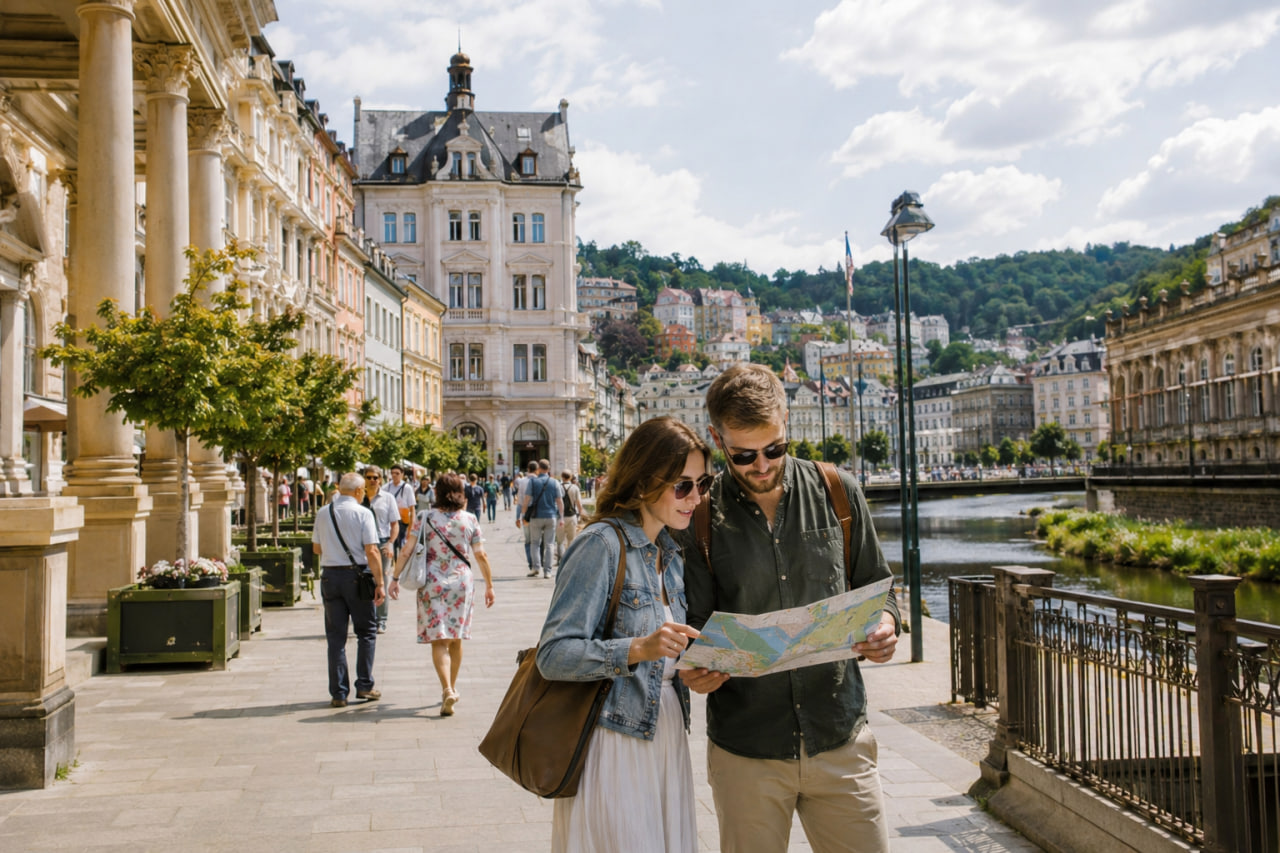
Karlovy Vary isn’t just about springs and drinking cures. It’s a city where, within walking distance of each other, you’ll find a 14th-century Gothic tower, a neo-Renaissance gallery designed by the architect of Prague’s National Theatre, and a neo-Gothic lookout tower built at the initiative of a Belgian princess. The city’s architectural history spans nearly 700 years — and most of this heritage can be seen for free.
This article focuses specifically on architecture and history: what was built, who built it, and why it’s worth seeing, even if you didn’t come to Karlovy Vary for treatment.
Castle Tower: The Only Surviving Fragment of the Medieval Fortress
The four-storey Gothic tower rising above the Market Square is the oldest architectural structure in the city. Its history dates back to around 1358 — it’s the sole surviving fragment of a small Gothic fortress built on the order of Emperor Charles IV, the resort’s founder.
After a major fire in 1608, the tower was rebuilt as a watchtower. Today, Castle Tower houses a restaurant and the “Na ochozu” (“At the Gallery”) art gallery — so this isn’t just a historical photo opportunity, but a functioning building you can actually step inside.
Address: Tržiště (above the Market Colonnade), historic centre.
The Colonnades: Architecture of Spa Tradition
The colonnades aren’t simply canopies over springs — they’re full architectural structures, each with its own history and style.
Mill Colonnade — the largest, built 1871–1881 in neo-Renaissance style. The architect was Josef Zítek, the same man who designed the National Theatre in Prague. The gallery runs 132 metres long, with 124 columns, sheltering five springs. Decorative sculptures on the roof represent the twelve months of the year.
Market Colonnade — wooden, in Swiss chalet style, built in 1883. It was here, at the Charles IV spring, that the city’s spa history began.
Geyser (Vřídlo) Colonnade — a modern glass structure over the city’s most famous spring. Inside: the hot Vřídlo spring, shooting up to 12 metres high at +72°C, rising from nearly 2 kilometres below ground. Beneath the colonnade lies an underground space open for tours.
Architecturally, the colonnades trace the evolution of spa construction: from a 19th-century wooden chalet to a neo-Renaissance stone gallery to 20th-century glass — all within a few hundred metres of each other.
The Municipal Theatre: Viennese Neo-Renaissance in Bohemia
The Karlovy Vary Municipal Theatre was built in 1886 to a design by Viennese architects Ferdinand Fellner and Hermann Helmer — the same firm that later designed Goethe’s Lookout Tower. The building is done in historicist style, with rich sculptural decoration, hand-painted details, and a carved curtain.
The theatre is still in active use, hosting performances, concerts, and cultural events throughout the year.
Address: Divadelní náměstí, historic centre.
Church of St Mary Magdalene: From Gothic Through Renaissance to Baroque
One of the city’s most historically layered buildings. The first church on this site dates back to the second half of the 14th century, in Gothic style. In 1518, the building was reconstructed with Renaissance elements. After a series of fires, the decision was made to rebuild the church from scratch — and what stands today on Freedom Square is a High Baroque monument, completed in 1737.
The church remains active, hosting services and sacred music concerts.
Address: náměstí Svobody, next to the Geyser Colonnade.
Goethe’s Lookout Tower: Neo-Gothic at the Initiative of a Belgian Princess
The wooden tower above the city is often associated with Goethe, but the building’s history is more interesting than a simple tribute to the poet.
The tower was built in 1888–1889 to a design by the same Viennese architects, Fellner and Helmer, who designed the Municipal Theatre. The project’s initiator was Belgian Princess Stéphanie, wife of Austrian Crown Prince Rudolf — she was so taken with the view from this hill that she pushed for an observation tower to be built. The structure was originally named “Crown Princess Stéphanie’s Lookout.” After World War I it was renamed in honour of writer Adalbert Stifter, became “Stalin’s Lookout” in 1945, and has carried Goethe’s name only since 1957 — Goethe did, in fact, take botanical walks in this area during his visits to Karlovy Vary.
Specifications: total height 39 metres, observation platform at 23.6 metres, 165 steps.
Important before visiting: the tower has been closed for renovation repeatedly throughout the 20th century, with the last major restoration completed in 2017–2018. As of 2026, the tower is open Friday through Sunday, 11:00–18:00 (hours may vary by season and weather) — we recommend checking the current schedule before visiting, as the site is not open daily.
How to get there: Bus No. 8 to the Hůrky stop, then about 1.2 km on foot along Gogol’s Path. Alternatively, walk from the centre via the yellow tourist trail through Three Crosses — a 3.5 km route with around 260 metres of elevation gain, a genuinely demanding hike.
Diana Tower: Early 20th-Century Neo-Gothic
Unlike the wooden Goethe’s Lookout, Diana Tower is built of brick, dating from 1912–1914, designed by local architect Anton Breinl in Nordic brick neo-Gothic style. It opened on 27 May 1914.
Specifications: total height 32 metres, observation platform at 24 metres, 150 steps or a lift.
Unlike Goethe’s Lookout, Diana operates regularly and is equipped with a modern lift — it’s the city’s most accessible and popular viewpoint, reached by funicular from the Grandhotel Pupp.
Dvořák Park: A Landscaped Garden in the Heart of the Resort
A park in the very centre of the city, named after Czech composer Antonín Dvořák. Beyond its landscaped beauty — manicured lawns, a small lake, and mature trees — the park contains a monument to the composer and a cast-iron colonnade with ornate detailing. Beneath it lies the Hadí (Snake) spring, the coldest of all Karlovy Vary’s mineral springs.
Museums in Historic Buildings
Two of the city’s museums add manufacturing history to the architectural picture.
Jan Becher Museum — housed in the building where the legendary herbal liqueur Becherovka has been produced for 150 years. The exact recipe remains a trade secret. The tour ends with a tasting.
Moser Glassworks Museum — 150 years of glassmaking history, over 2,000 exhibits, and the chance to watch glassblowers at work in real time.
Practical Tip: Where to Start an Architecture-Focused Route
Most of the buildings described here are within walking distance of the centre, except for the two lookout towers. A sensible one-day route:
Castle Tower → Market Colonnade → Geyser Colonnade → Church of St Mary Magdalene → Mill Colonnade → Municipal Theatre → Dvořák Park.
For the lookout towers (Diana and Goethe), it’s worth setting aside a separate half-day — especially if you plan to hike to Goethe’s Lookout via Three Crosses.
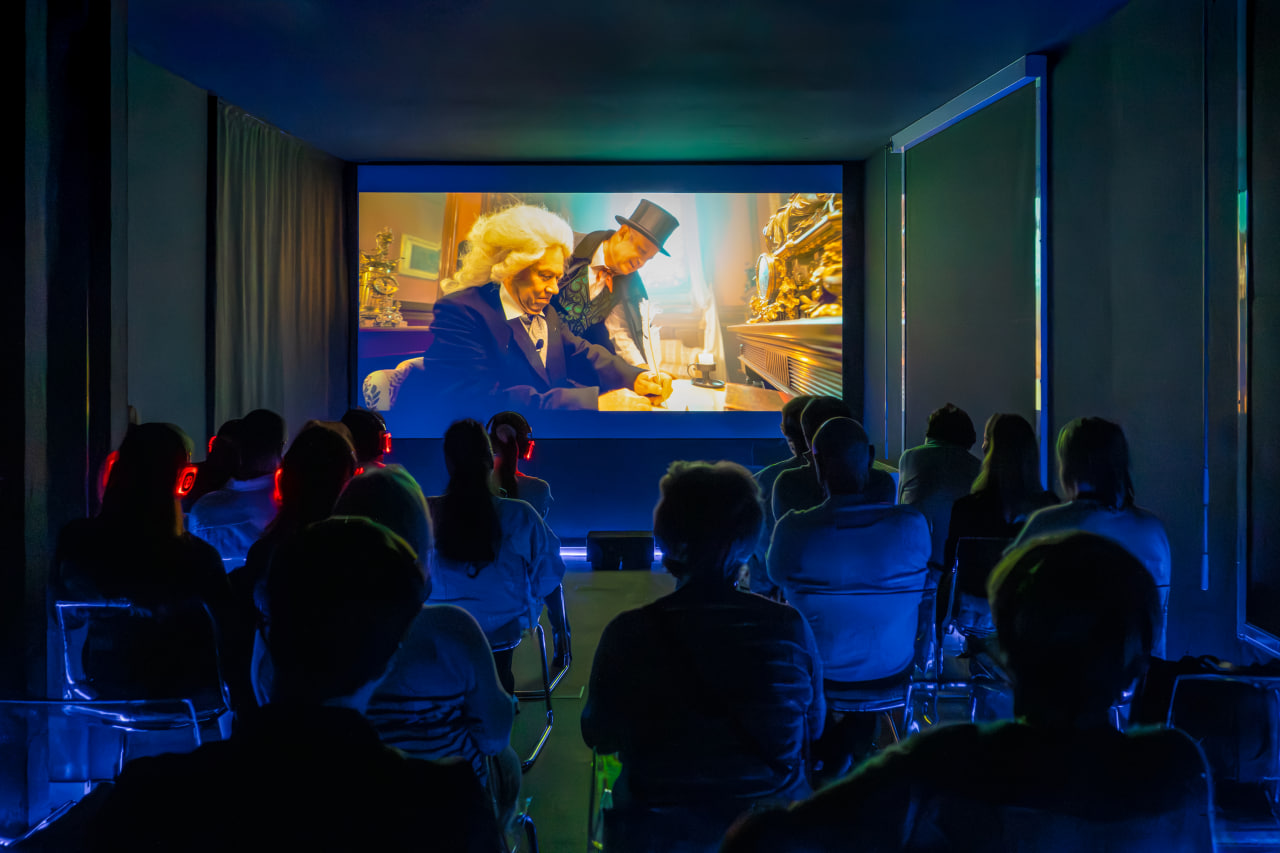
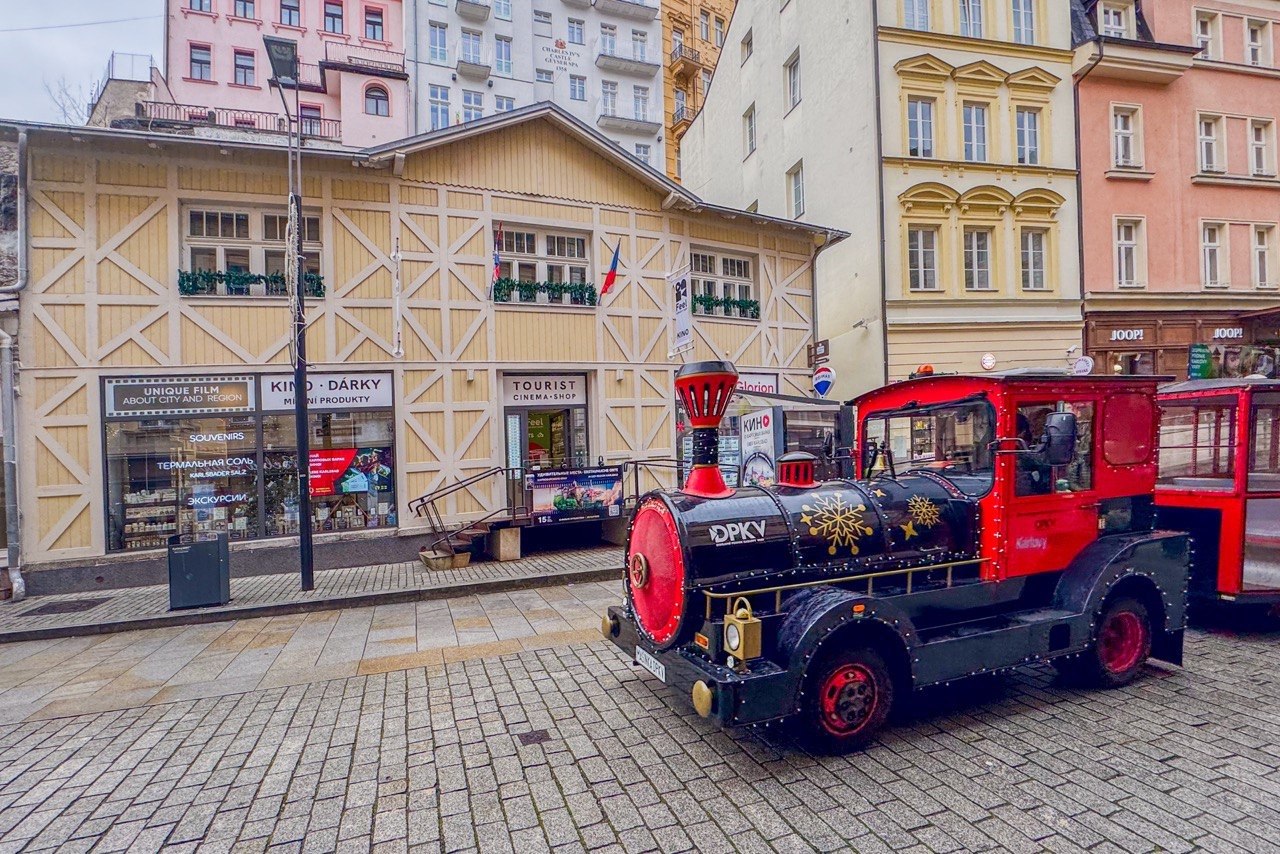
Before visiting the Cinema Hub at Feel Karlovy Vary, it’s worth watching the documentary “Karlovy Vary: The Power of Water” — it provides the resort’s historical context, which makes an architecture walk considerably more meaningful.
Frequently Asked Questions
Can you climb Goethe’s Lookout Tower without booking ahead? Yes, but only during opening days and hours (currently Friday–Sunday, 11:00–18:00, as of 2026). The tower is closed on weekdays — the key to the platform is issued at the café’s serving window next to the tower.
Which colonnade is the oldest? The Market Colonnade — the city’s spa history began right here, at the Charles IV spring.
Are the lookout towers free? Entry to Goethe’s Lookout platform is free. Diana Tower’s platform is also free to access; only the funicular ride up the hill is paid.
Who designed the Mill Colonnade? Josef Zítek — the same architect who designed the National Theatre in Prague.
movieRecommended after a walk around the city
Discover the secrets of Karlovy Vary in the film “The Power of Water”
A unique documentary film about thermal springs, the history of the resort, healing water and why Karlovy Vary became one of the most famous spa towns in Europe.
alarm60 minutes in Russian, English, German and Czech
calendar_monthScreenings daily at 16:00 and 20:00
location_onCinema hall in the center, next to the Mill Colonnade